 on September 22, 2026
Property Management Articles
on September 22, 2026
Property Management Articles The best property management software for landlords in 2026 comes down to one thing: portfolio size. Large operators lean on all-in-one platforms like AppFolio and Buildium; small and DIY landlords get further with free tools like TurboTenant and Innago. Below, we rank and compare the top 12 by price, features, and fit—so you can shortlist in minutes.
The hard part isn’t finding software—it’s finding a tool that fits your portfolio without overpaying for features you’ll never use. This guide covers the most popular platforms for residential property management, from large-portfolio systems to simple, affordable tools for small landlords, with verified 2026 pricing and mobile-first workflows in mind.
Best Property Management Software Compared and Rated: 2026 at a Glance
To help you run a quick property management software pricing comparison, here is how the top platforms stack up on costs, ideal use cases, and Lula compatibility.
| Software | Best for | Starting price & pricing structure | Lula integration |
|---|---|---|---|
| AppFolio | Diverse and large portfolios | From $1.49/unit/month ($298 monthly minimum, 50-unit minimum); pricing now quote-only | ✅ Stack Marketplace |
| Buildium | All portfolio sizes | From $62/month (Essential), $192 (Growth), $400 (Premium); scales with unit count | ✅ Buildium Marketplace |
| DoorLoop | Small-to-large portfolios | From $69/month billed annually (Starter, up to 10 units) | Manual |
| Rent Manager | Mid-to-large portfolios | Quote-based; last reported $1.00–$2.50/unit/month ($200–$450 monthly minimum) | ✅ Available Integrations Marketplace |
| Rentvine | Growing portfolios | As low as $1.50/unit/month; one all-inclusive plan | ✅ Direct integration |
| TurboTenant | Small and DIY landlords | Free tier available; paid plans from $149/year (about $12.42/month) | ✅ Maintenance Plus |
| Avail | Tenant acquisition | Free tier available; Unlimited Plus $9/unit/month | Manual |
| Yardi Breeze | Residential portfolios | From $1/unit/mo ($100 min); Premier $2/unit/mo ($400 min) | Manual |
| Stessa | Financial tracking | Free tier available; Manage from $12/month, Pro from $28/month (annual) | Manual |
| Baselane | Landlord banking and bookkeeping | Free Core plan; Smart $20/month | Manual |
| Landlord Studio | Small portfolios | Free tier available; PRO from $12/month billed annually, 3 units then $1/extra unit | Manual |
| Innago | Small-to-mid portfolios | Free; optional usage-based tenant fees | Manual |
Top-Rated Property Management Software for Large Portfolios
The following few property management software solutions are some of the best known options in the industry. They are comprehensive, intuitive, and integrated with many of the other tools that you use.
If you want to accelerate growth and have a full box of tools, check these out.
AppFolio
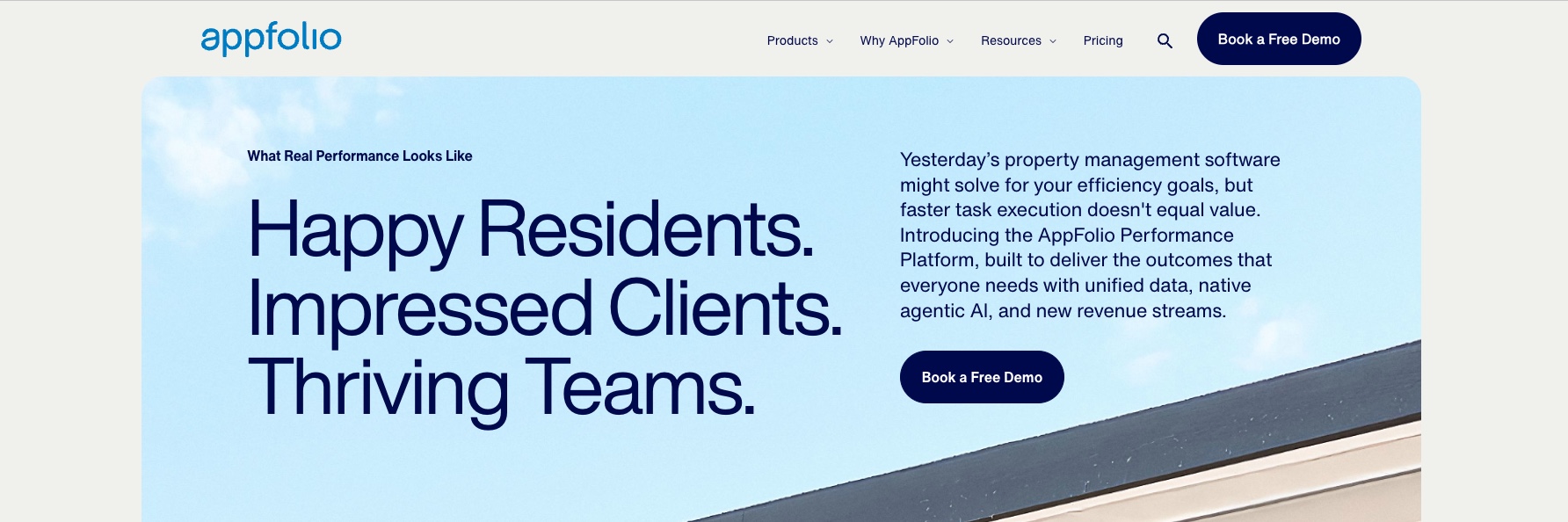
AppFolio is widely recognized as one of the most robust property management platforms on the market. It offers everything from marketing and leasing tools to maintenance management, accounting, and owner and tenant portals—all in a single, cloud-based system.
The platform is built for scalability, making it ideal for landlords and property managers with diverse or expanding portfolios. AppFolio requires a minimum of 50 units to start, and pricing begins at $1.49 per unit per month with a $298 minimum monthly spend on its Core plan. For those who need more advanced features such as workflow automation, performance insights, and open API access, the Plus plan starts at $3.20 per unit per month with a $960 monthly minimum.
AppFolio’s premium pricing reflects its advanced capabilities and enterprise-level tools, making it best suited for mid to large-sized portfolios rather than small, independent landlords. Lula also integrates with AppFolio through the Stack Marketplace, helping property managers streamline maintenance operations directly within their existing workflows.
Buildium
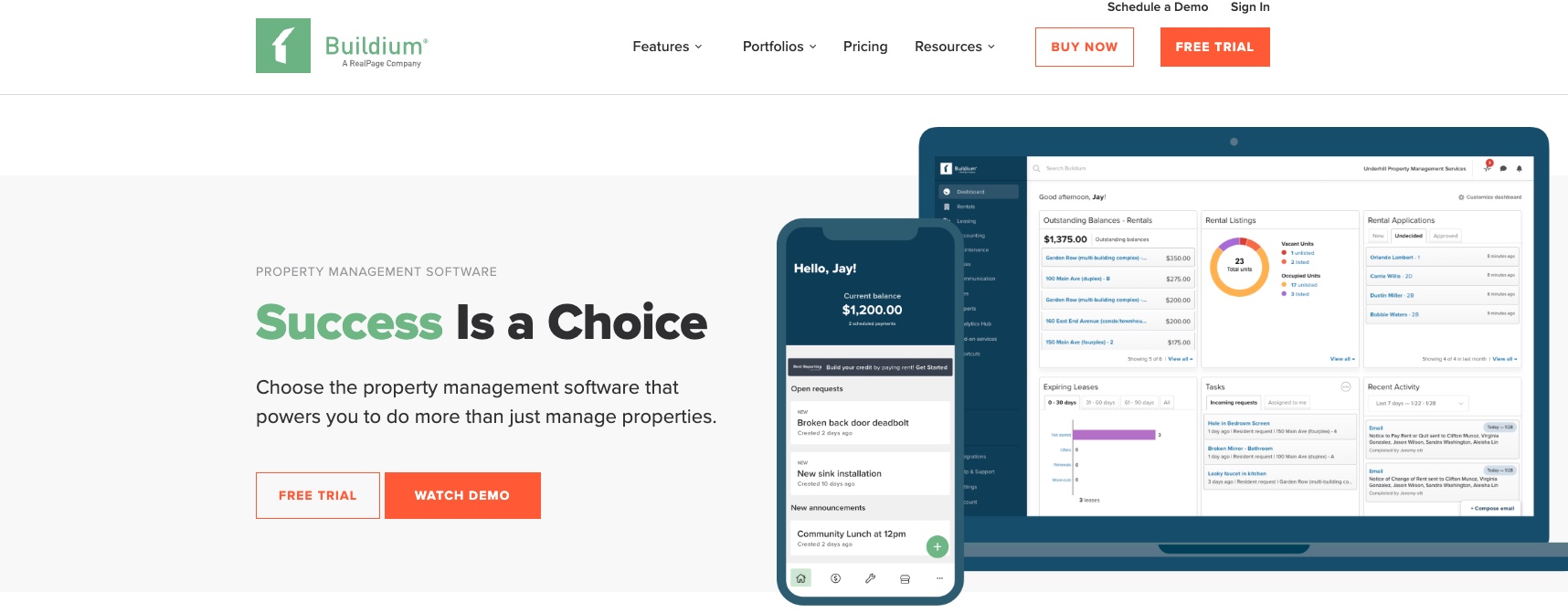
Frequently listed near the top with AppFolio, Buildium’s property management software offers a full suite of tools for landlords and property managers with portfolios large or small. From residential properties and HOAs to affordable housing and student rentals, it covers all the essentials such as property management accounting, online rent collection, maintenance tracking, tenant and owner portals, reporting, and leasing workflows.
Buildium publishes its pricing openly, which makes it easy to budget against. The Essential plan starts at $62 per month, Growth at $192 per month, and Premium at $400 per month. Moving up the tiers unlocks more advanced features like performance analytics, live phone support, and open API access. Each plan’s price scales with the number of units you manage, and portfolios above 5,000 units move to custom pricing.
Lula also integrates with Buildium through the Buildium Marketplace, so maintenance requests are triaged, scheduled, and completed without leaving your system of record.
It’s a powerful, user-friendly platform built to simplify the daily operations of landlords and property managers alike, offering the depth larger portfolios need, without overwhelming smaller ones.
Rentvine
If you’re looking for an alternative to the two big rivals at the top, Rentvine is worth checking out, and it’s particularly well-equipped for growing or larger portfolios. It offers the same level of functionality as Buildium and AppFolio, with an emphasis on simplicity, automated workflows, and strong customer support.
Its software includes everything you’d expect from a full-featured property management platform: marketing, tenant screening, lease and document management, maintenance scheduling, vendor payments, reporting, and owner statements. Pricing is highly flexible and transparent, scaling as low as $1.50 per unit per month depending on your portfolio commitment size,.
In 2026, Rentvine remains a top-rated partner with integration with Lula, allowing property managers to handle maintenance requests directly within the Rentvine platform. The partnership adds another layer of efficiency to an already intuitive system, helping users streamline work orders and vendor coordination without switching tools.
Rent Manager
For landlords and property managers who require a highly customizable solution, Rent Manager is a top-tier choice that scales effortlessly with your business. It is particularly effective for those who find “out-of-the-box” software too limiting, as it offers vast flexibility in property management accounting, reporting, and data management.
Rent Manager sells its platform in three bundles: Basic, Plus, and Premium. Each step up layers on more capability, with Plus adding the tenant call center service and the rmApp Suite Pro mobile app, and Premium adding video inspections, maintenance scheduling, and priority support. Every tier supports unlimited users, so growing your team doesn’t grow your bill.
Rent Manager no longer publishes rates, and pricing is quote-based as of 2026. Figures reported before the change put Basic near $1.00 per unit per month against a $200 monthly minimum, Plus near $1.50 with a $300 minimum, and Premium in the $2.25 to $2.50 range with a minimum of roughly $450. Treat those as directional and request a quote for current pricing.
In 2025, Lula officially partnered with Rent Manager, becoming a key player in their Available Integrations Marketplace. This partnership delivers a seamless, AI-powered maintenance experience, allowing users to automate workflows with 24/7 service.
Managers can now leverage Lula’s vetted network of over 9,000 pros directly within the Rent Manager platform, ensuring real-time visibility with before-and-after photos and quality checks for every work order.
DoorLoop
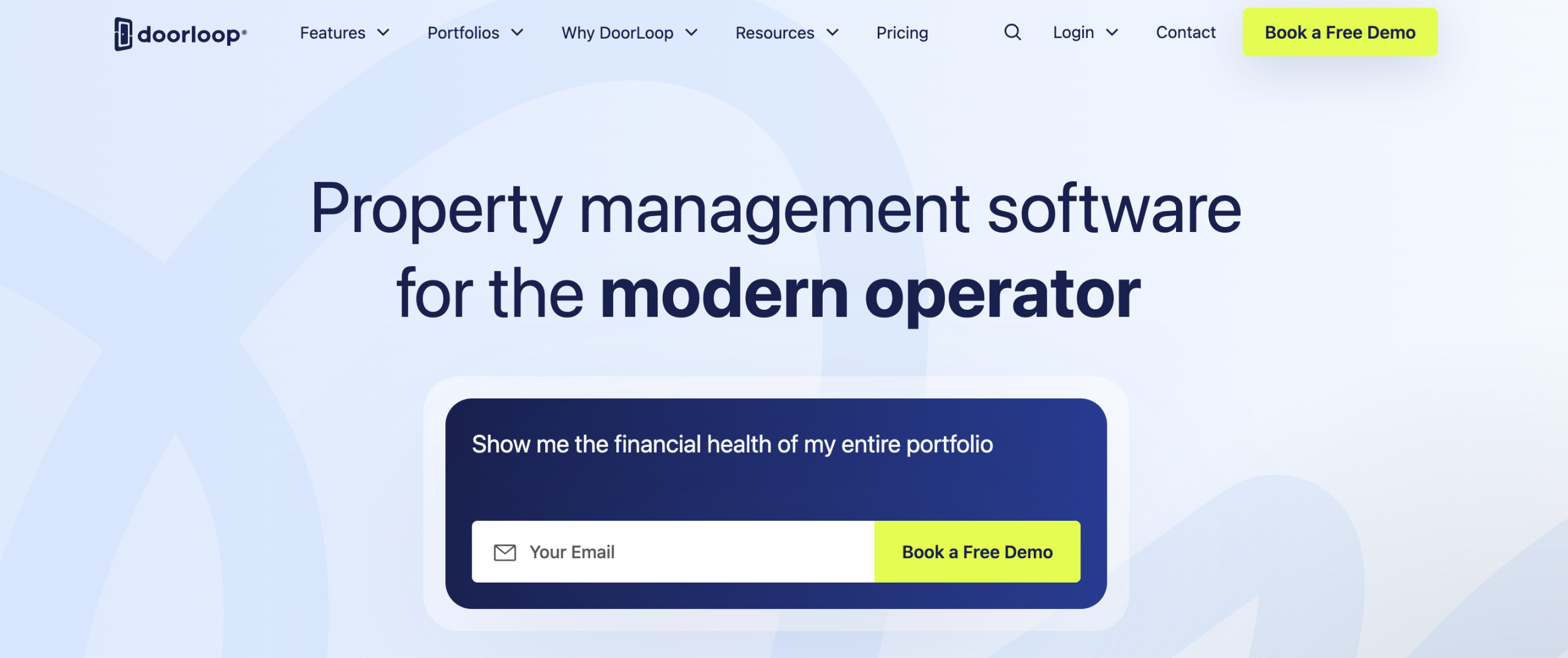
DoorLoop has grown quickly into one of the most frequently recommended all-in-one platforms, and it competes directly with Buildium and AppFolio on features while staying accessible to smaller operators. It covers accounting, online rent collection, tenant screening, lease management, maintenance requests, owner and tenant portals, and marketing, with an open API and a large integration library.
Pricing is published and tiered. Starter runs $69 per month billed annually, or $99 month to month, and caps at 10 units. Pro moves to $149 per month billed annually, or $189 monthly, adding bank reconciliation and role-based access. Premium is $209 per month billed annually, or $239 monthly, and carries an onboarding fee scaled to portfolio size. Larger portfolios above 300 units move to custom pricing, and per-unit charges apply once you pass a plan’s base allowance.
What sets DoorLoop apart is how much it includes at the entry tier. Unlike platforms that gate accounting or reporting behind higher plans, DoorLoop gives smaller landlords a full-featured system early, which makes it a strong middle option for managers who have outgrown free software but aren’t ready for AppFolio’s 50-unit floor.
Affordable Property Management Software for Landlords
We’ve covered a couple of big names, as well as a promising alternative, but each come with a price tag. Some landlords are either trying to cut costs when it comes to software, or they simply don’t need the kind of diverse set of tools that comes with a pricey top contender like Buildium.
If you are looking for the best free property management software, these four solutions offer robust functionality without the high monthly overhead.
TurboTenant
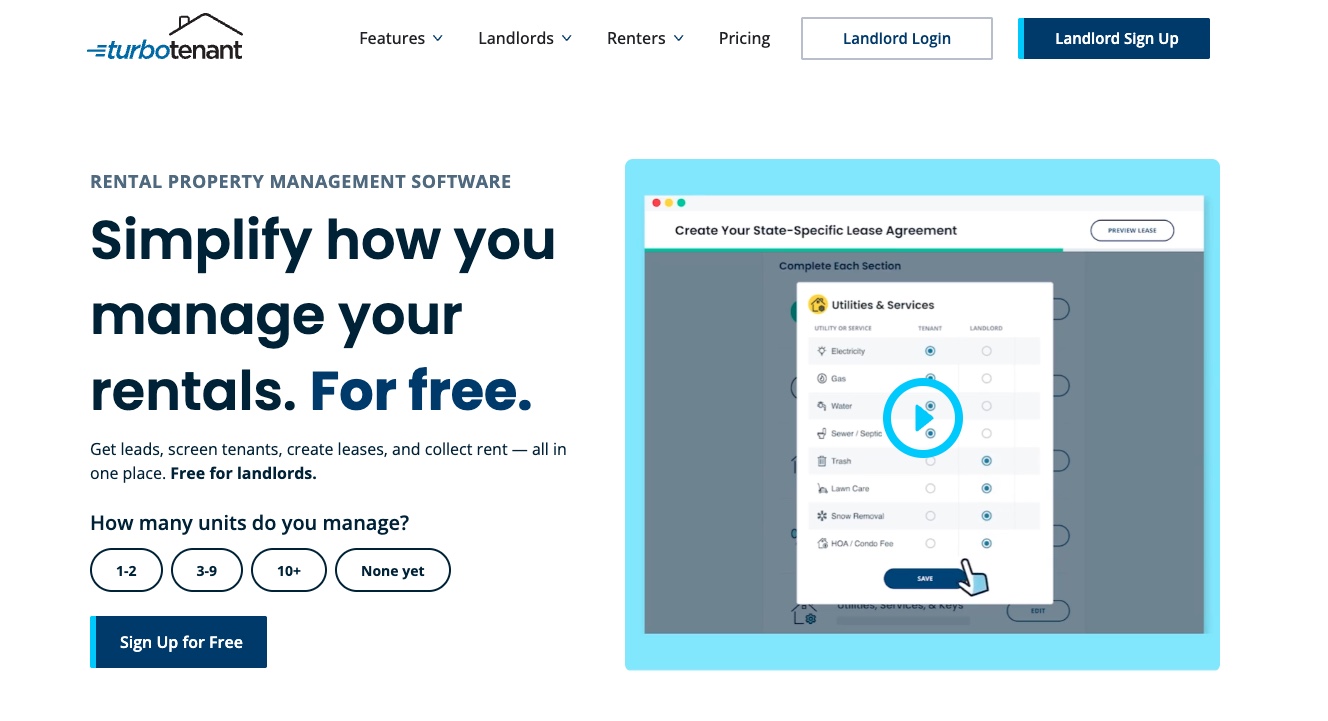
TurboTenant continues to rank among the top free property management software options, offering a comprehensive set of tools for landlords with smaller portfolios. Its free plan includes everything you need to manage day-to-day operations: rental listings, online rent collection, tenant screening, maintenance requests, and accounting tools, all from one easy-to-use dashboard.
The platform excels at helping landlords attract and onboard tenants, with strong features for marketing, online rental applications, credit and background checks, and customizable lease agreements. For those who want additional capabilities such as income verification, unlimited e-signatures, or faster payout times, TurboTenant offers a paid Premium subscription in two tiers. Essentials starts at $149 per year, which works out to about $12.42 per month, and Pro starts at $199 per year and adds accounting tools. Both tiers are billed annually, and pricing rises with portfolio size.
For budget-conscious landlords, TurboTenant brings an impressive array of property management solutions to the table. Lula also partners with TurboTenant, powering its Maintenance Plus service with 24/7 tenant coordination and access to a vetted Pro network.
Avail
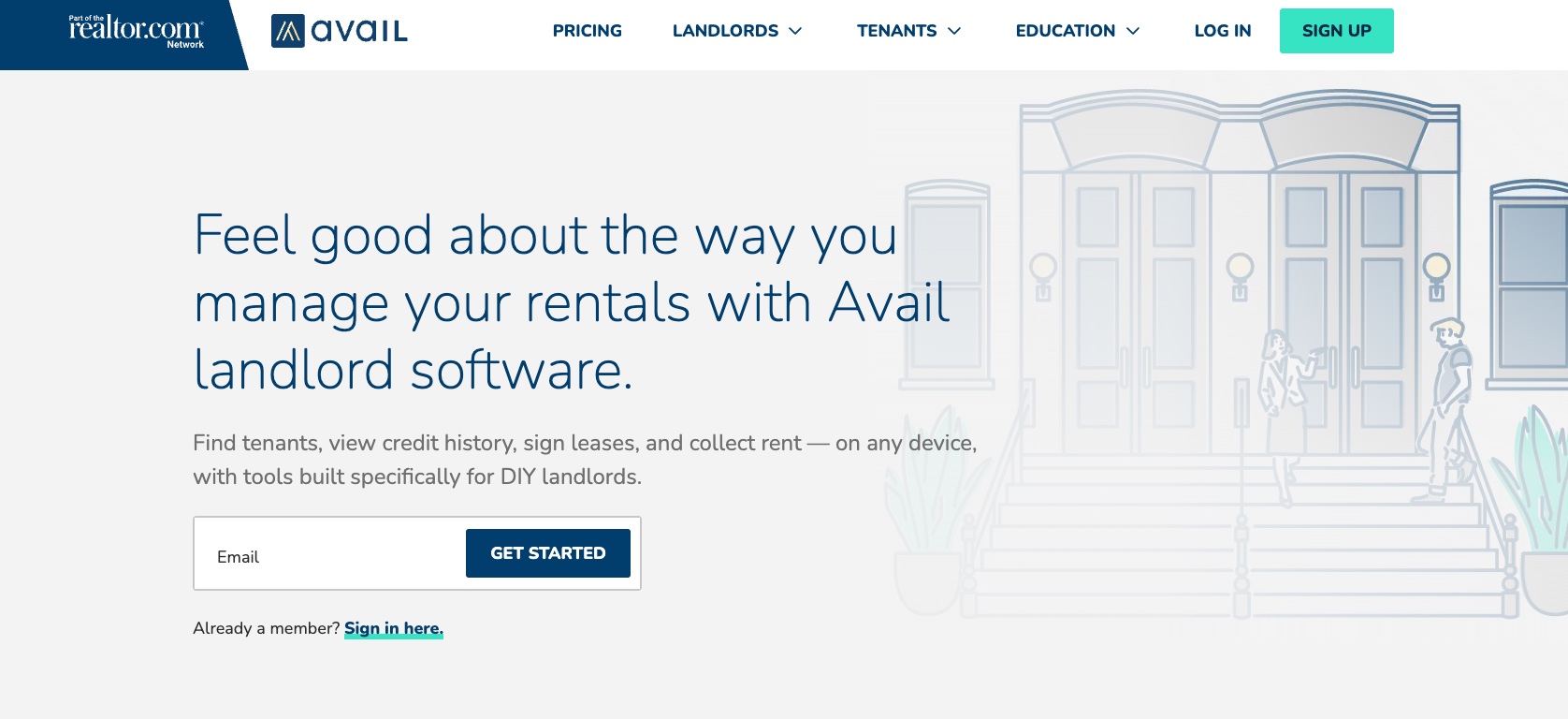
Like TurboTenant, Avail is another free software that has some useful tools for securing new tenants.
With Avail, you can syndicate rental listings on a number of the top rental listing websites, including Apartments.com, Realtor.com, and Redfin. Their free software package includes the standard items (background screening, online rent collection, maintenance tracking, property accounting, a tenant portal, etc.).
If you want more advanced tools, the “Unlimited Plus” plan costs $9 per unit per month and adds features such as next-day rent payouts, waived ACH fees, customizable applications and leases, dedicated property websites, and faster customer support.
This makes Avail especially compelling for smaller portfolios or landlords who want a flexible, cost-effective platform that lets them scale up when needed.
Yardi Breeze
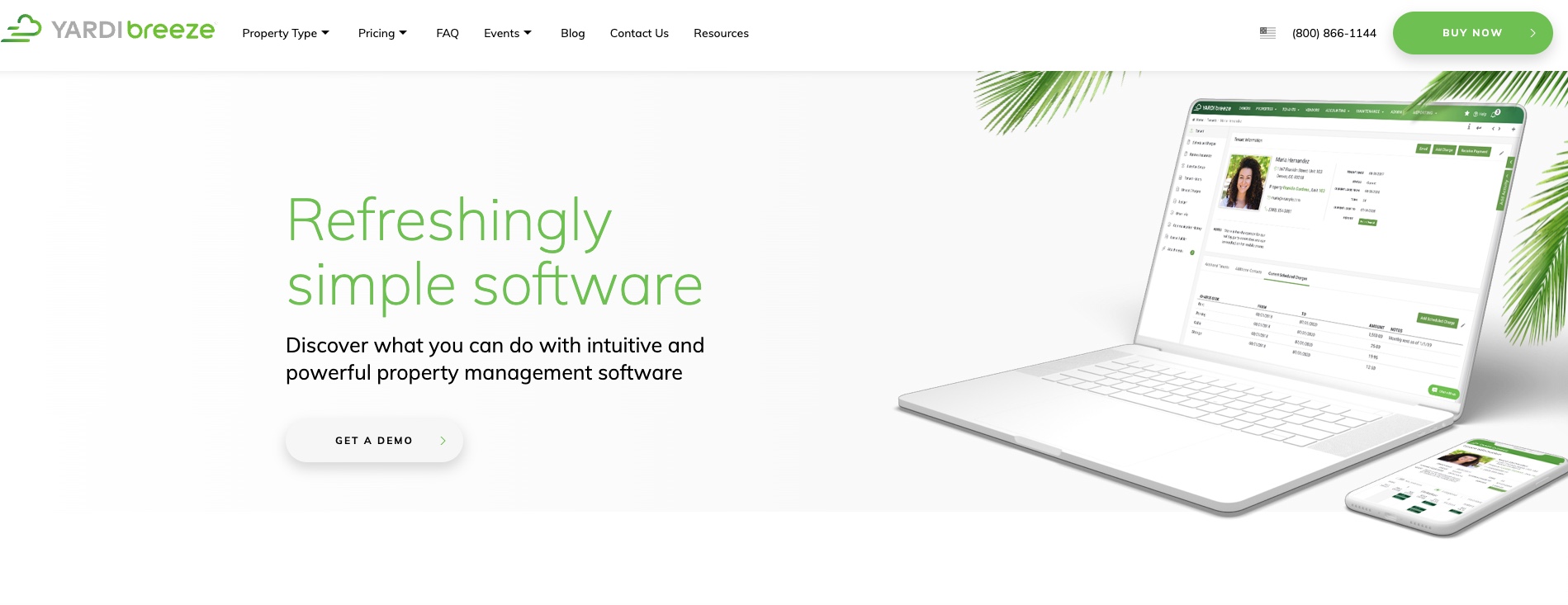
Founded in 1984, Yardi has long been one of the most established names in property management software. Yardi Breeze is its modern, cloud-based solution designed for residential portfolios, bringing accounting, leasing, maintenance, and owner and tenant portals together in one intuitive platform.
For residential users, Yardi Breeze offers two main packages. The Breeze plan starts at $1 per unit per month with a $100 monthly minimum, making it a cost-effective option for landlords who need core management tools and simple property management workflows. Breeze Premier starts at $2 per unit per month with a $400 monthly minimum, and adds advanced features such as utility billing, automated income verification, and expanded reporting. Yardi offers a discounted $1-per-unit Premier rate only when you bundle resident screening and renters insurance on a 12-month contract.
Because both plans carry a monthly floor, the effective per-unit cost depends heavily on portfolio size. A 100-unit portfolio hits the Breeze minimum almost exactly, while Premier’s $400 floor is reached at roughly 200 units at the standard $2 rate.
With its straightforward pricing and trusted reputation, Yardi Breeze is a strong choice for landlords and property managers looking for dependable, easy-to-use software backed by decades of industry experience.
Stessa
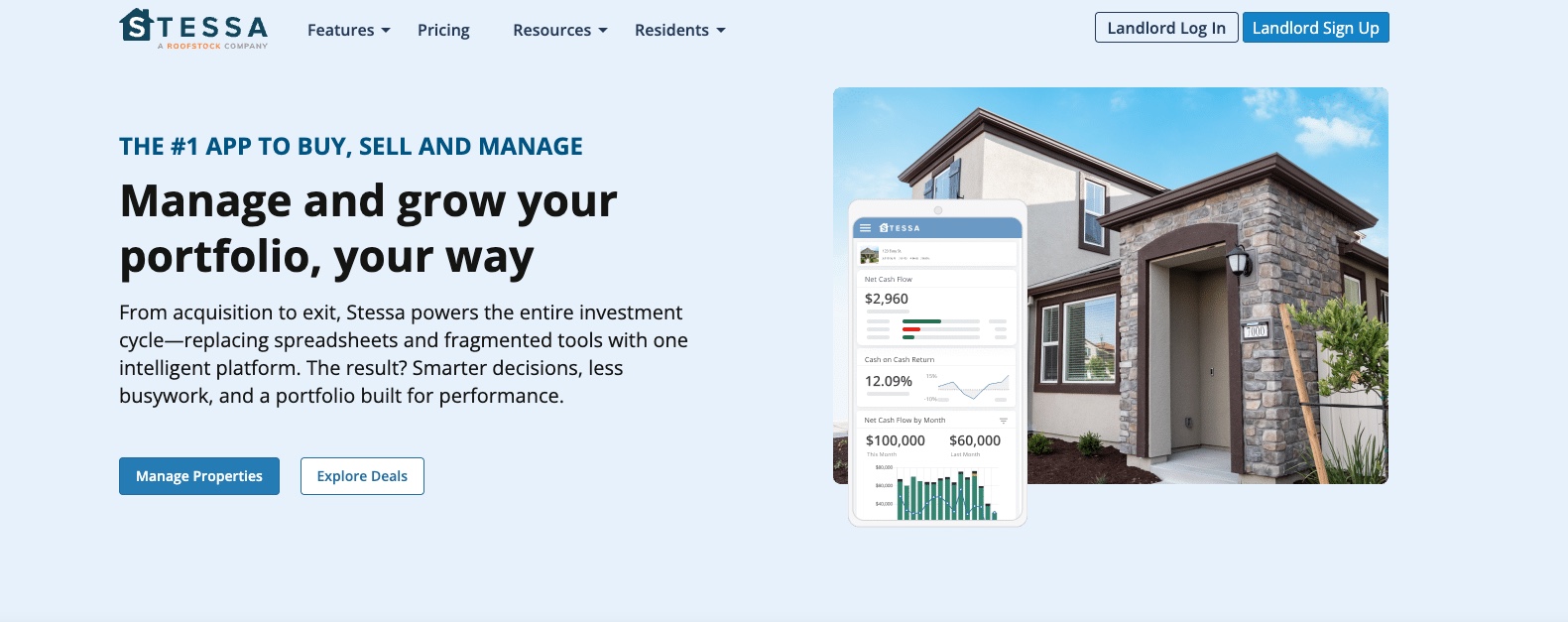
Stessa offers a powerful free plan that allows landlords and small owners to start managing their portfolios without upfront cost, ideal for tracking income and expenses, handling online rent collection, and generating basic reports.
When you’re ready for more advanced capabilities, Stessa’s paid tiers unlock features like comprehensive financial dashboards, deep transaction tracking, accelerated rent payouts and enhanced tax-ready reporting.
Because the free tier supports unlimited properties and integrates key financial functions, Stessa is a compelling option for landlords looking to streamline their operations and access investment-grade analytics without shifting away from their core tools. It is widely considered one of the best property management apps for investors focused on the financial performance of their assets.
Baselane
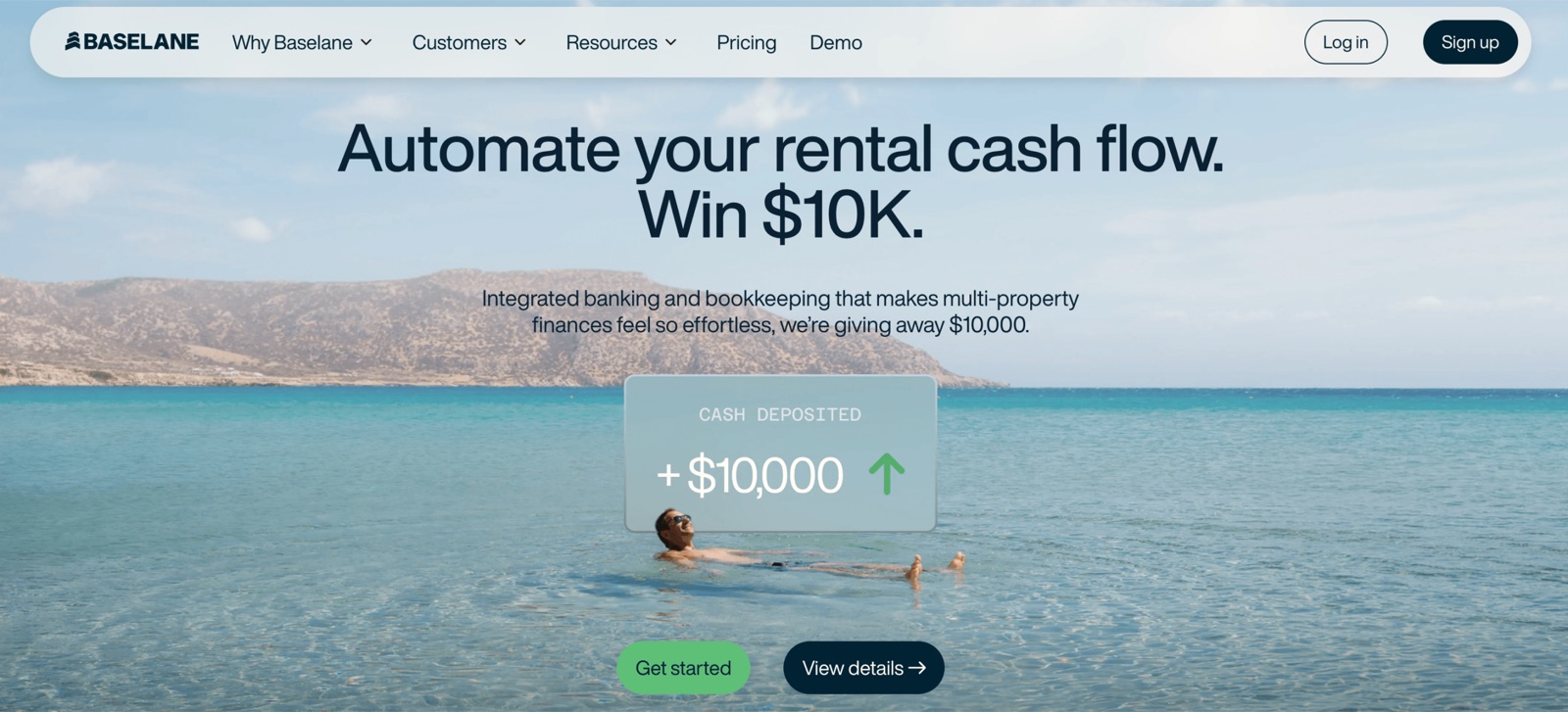
Baselane takes a different angle from most platforms on this list, building landlord banking and bookkeeping into the property management workflow rather than bolting financials on at the end. It has become one of the fastest-rising names for independent landlords who want their rent collection, banking, and tax prep in one place.
The free Core plan includes unlimited property-level checking and high-yield savings accounts, FDIC insurance, virtual and physical debit cards, automated rent collection with reminders and late fees, transaction tracking by property and entity, and Schedule E tax reports. For landlords who want more automation, the Smart plan runs $20 per month and adds 2-day rent deposits instead of the standard 5, AI-powered transaction categorization across 120+ categories, automatic receipt matching, balance sheet reports, and shared team access.
Fees are transparent and usage-based. ACH rent payments cost $2 and can be covered by either party, card payments carry a 3.49% convenience charge, and wire transfers run $15 unless your combined balance exceeds $50,000. For landlords focused on the financial performance of their portfolio, Baselane sits alongside Stessa as one of the strongest options that doesn’t charge per unit.
Best Property Management Software for Small Landlords
For those seeking the best property management software for small landlords, the priority is often balancing cost-efficiency with professional-grade features. While free tools such as TurboTenant are great starting points, these companies offer highly competitive, pay-as-you-grow models tailored to smaller portfolios.
Landlord Studio
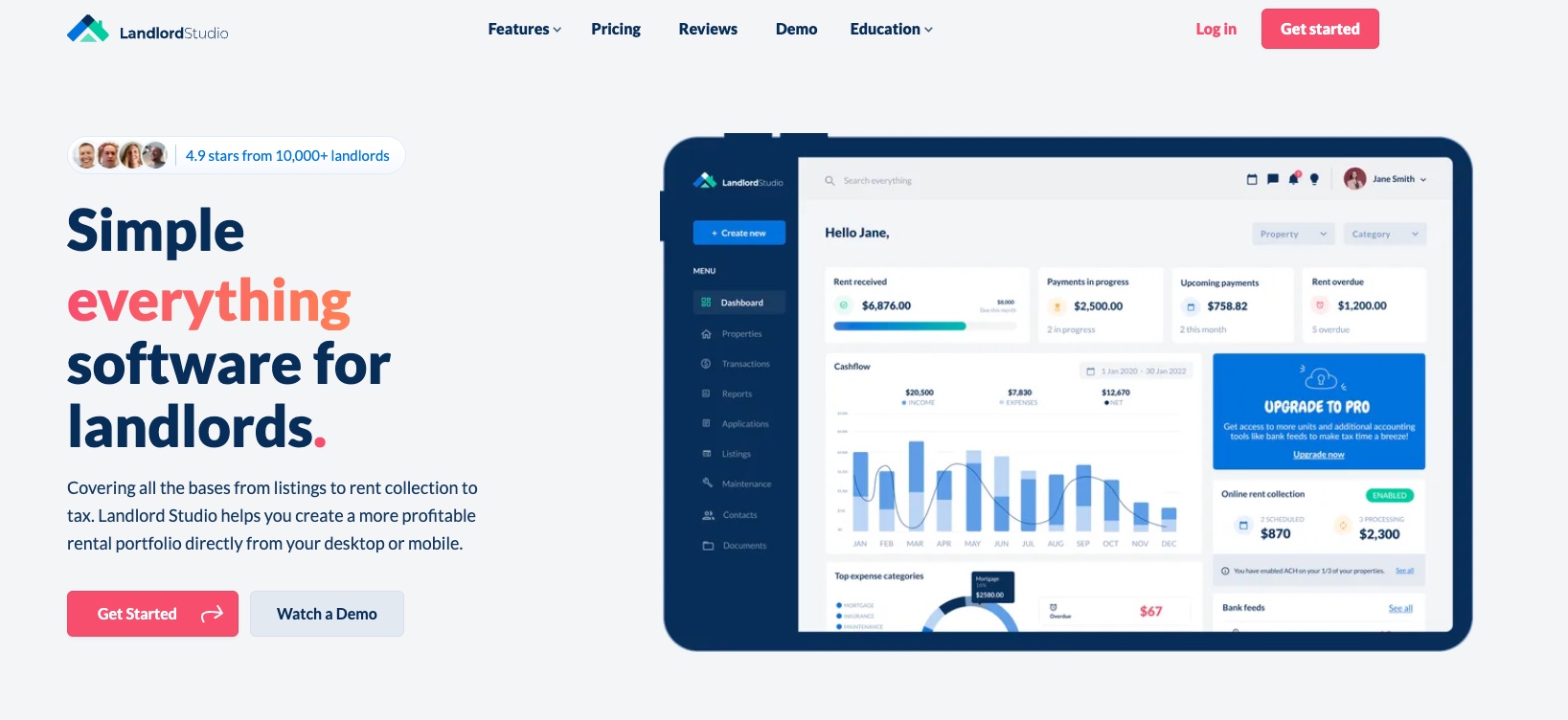
Landlord Studio’s free “GO” plan covers up to 3 units and includes manual income and expense tracking, online rent collection (with a small transaction fee), maintenance tracking, basic reports, and even a GPS mileage tracker. These are solid essentials for landlords getting started, though GO is limited to a single user and 10 stored documents.
When you’re ready for more automated property management, the PRO plan starts at $12 per month billed annually, or $15 per month if you pay month to month. It remains highly competitive, adding features like automated bank feeds, recurring expenses, multi-user access for up to five users, AI-assisted bookkeeping, full data export, and enhanced reporting with 20+ report types. For landlords who want more collaboration and storage capacity, the PRO Plus plan starts at $28 per month billed annually, increases support to ten users, and unlocks unlimited document storage.
Both paid plans include 3 units, with additional units billed at $1 each per month. That keeps costs predictable as you grow: a 10-unit portfolio on PRO runs about $19 per month on annual billing.
Overall, Landlord Studio offers one of the most flexible and cost-effective pricing models around, making it an ideal upgrade for small landlords who are ready to scale without breaking their budget.
Innago
The final property management software on our list is Innago—and it’s definitely not one to overlook if you’re managing a smaller portfolio.
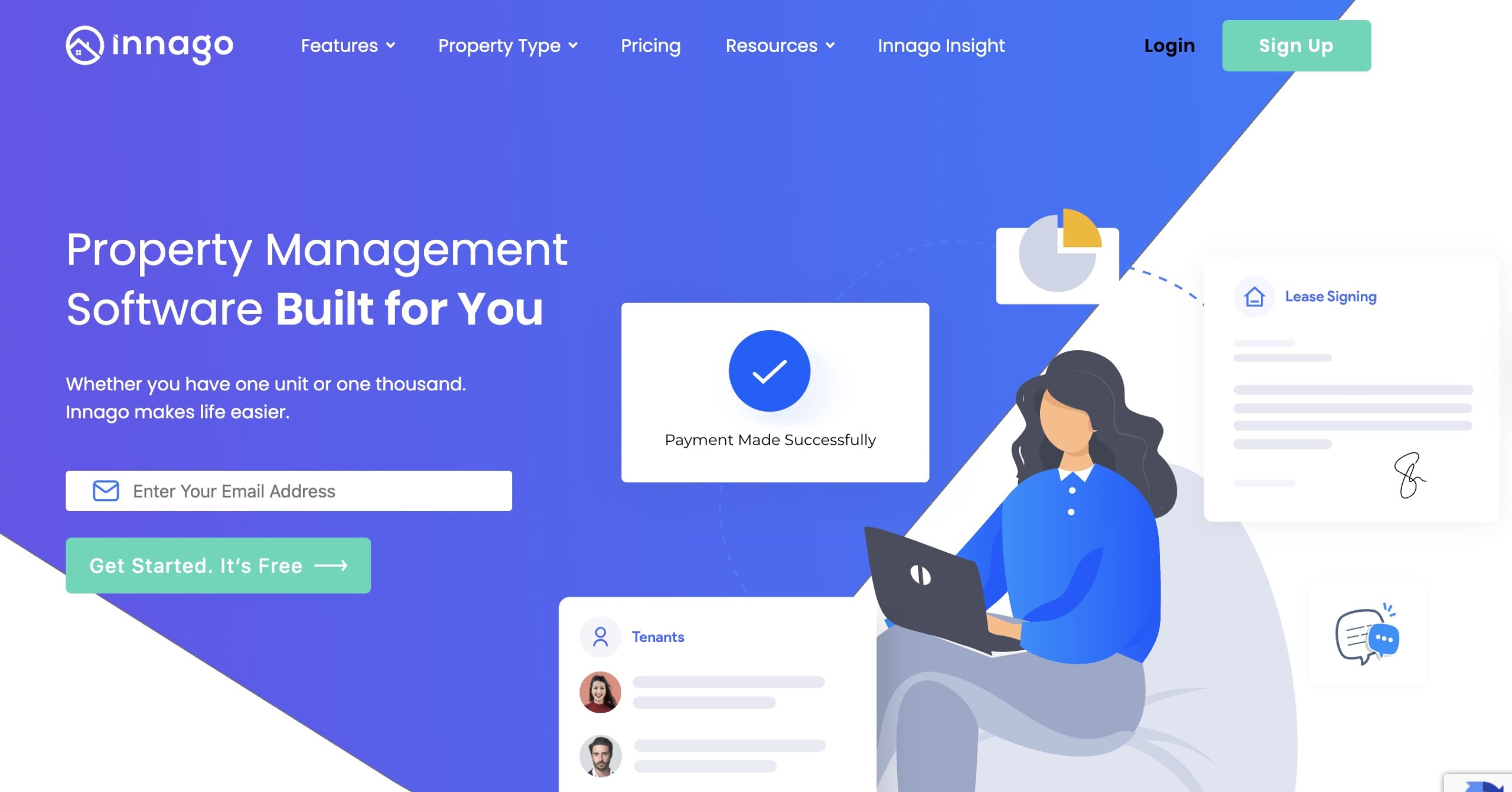
Innago stands out as one of the few platforms that’s completely free for landlords, with no setup or monthly subscription fees. Even at no cost, it’s includes online rent collection, tenant screening, digital lease signing and document storage, income and expense tracking, work order management, tenant communication tools, and automated late fees and invoicing—plus direct customer support, which is rare for free software.
Innago’s paid services are optional and usage-based, rather than tiered subscriptions. For example, tenant screening reports are charged per applicant, and tenant payment processing carries small transaction fees (ACH or credit card). This makes Innago a great fit for landlords who want robust functionality without committing to a monthly plan.
That said, if you need advanced accounting, integrations, or large-scale portfolio management, you may find the simplicity of Innago limiting compared to enterprise systems like Buildium or AppFolio. But for smaller landlords, it’s one of the most feature-rich free simple property management tools available.
How to Choose Simple Property Management Software
Before making a choice, it’s worth stepping back to evaluate what actually matters for your business. The “best” software depends on your portfolio size, operations, and goals, but most landlords and property managers should consider these key factors before committing.
1. Scalability and Portfolio Fit
The right software should grow with you. Whether you manage five units or five hundred, look for platforms that offer tiered pricing and add-on modules as your portfolio expands. Some tools like AppFolio or Buildium, require a minimum number of units, while others, like TurboTenant and Innago, are ideal for smaller or growing portfolios.
2. Integration and Compatibility
Your property management system shouldn’t exist in a silo. Look for open APIs or integrations with accounting tools (like QuickBooks), communication platforms, and maintenance systems. And while not every solution connects directly, complementary tools such as Bright Investor can help property managers analyze markets and identify new growth opportunities alongside their operational software.
For example, many property managers connect their core software to platforms like Lula, which streamlines maintenance scheduling, vendor management, and service coordination across systems such as AppFolio and TurboTenant.
3. Practical Automation and AI
In 2026, automated property management is no longer just a “nice-to-have.” Prioritize features like automated income verification, AI-driven tenant screening, and automatic late fee notices. These tools free up hours each week and reduce the risk of human error in your leasing and collection workflows.
4. Robust Reporting and Financial Compliance
Your software should be the “source of truth” for your cash flow. Look for customizable reporting that tracks what matters most—income and expense summaries, maintenance trends, and occupancy rates. High-tier systems now offer “tax-ready” reporting that simplifies 1099 filings and year-end accounting.
5. Ease of Use and Support
Even the most powerful software is useless if it’s too complex for your team to use. Look for intuitive dashboards and reliable property management apps that allow you to manage work orders, communicate with tenants, and view financial snapshots on the go. Reliable onboarding and responsive, U.S.-based customer support are also key to minimizing disruptions.
Many platforms offer free demos or trial periods, so take advantage of those to see how the interface feels and whether it fits your workflow. Smooth communication between your team, vendors, and property owners is often what separates good software from great software.
6. Total Cost of Ownership
Consider your total cost of ownership, including monthly fees, minimum unit thresholds, and any add-on costs for features like e-signatures or integrations. Free or low-cost platforms can be great starting points, but as your needs evolve, ensure that the next pricing tier delivers meaningful ROI.
Which Property management software is best for your business?
There’s no single “best” choice, only the right property management software for your portfolio and workflow. The ideal fit depends on how many units you manage, the type of properties you own, and whether you want an all-in-one platform.
Some tools serve specific niches: Propertyware focuses on single-family portfolios, while others like SummerOS target short-term operators with performance and ops tooling.
Once you’ve got a shortlist, test before you commit. Try a free plan or demo to see if it’s easy to collect rent online, screen tenants, and manage leases for multiple rental properties. You’ll quickly learn whether the platform’s financial reports, tenant management, and mobile apps fit your needs, or if something essential to your business operations falls short.
Take your time, request a demo, and test the mobile functionality before you commit. The right tool for 2026 is the one that frees you from manual tasks so you can focus on what actually matters: growing your business.
Ready to see how Lula can supercharge your current PMS? Explore our integrations here.
THE MAINTENANCE GAP
Every platform above logs the work order. None of them fix the unit.
Property management software tracks the request. Someone still has to schedule a technician, agree a price, and confirm the job was done. For teams running larger portfolios, that coordination is usually the most expensive part of maintenance and the least automated.
Lula runs that layer alongside the software you already use:
- Predictive maintenance that forecasts the work instead of reacting to it
- Make-ready turns managed by a local W-2 field manager
- Two-way integrations with AppFolio, Buildium, Rent Manager and Rentvine
Best Property Management Software FAQs
What is the most popular property management software?
Among professional property managers, AppFolio, Buildium, and Yardi are the most widely used platforms, thanks to their depth across accounting, leasing, and maintenance. For smaller and DIY landlords, TurboTenant is one of the most widely used free options, covering listings, screening, and rent collection. The right fit comes down to portfolio size: enterprise platforms suit larger books, while free tools cover the essentials for under 50 units. Whichever you run, Lula connects to the major platforms so maintenance coordination stays inside your existing system.
What is the leading landlord software?
There is no single leader, because landlord software tends to lead in one area rather than across the board. TurboTenant leads on tenant acquisition and free listings, Stessa on financial tracking and tax-ready reporting, and Buildium or AppFolio on all-in-one operations for larger portfolios. The gap most of these tools share is hands-on maintenance: a platform can log a work order, but it cannot complete the repair. That is where Lula comes in, pairing your existing software with a network of 9,000+ vetted pros to handle the work end to end.
What is the best property management software for small landlords?
For small landlords managing fewer than 50 units, TurboTenant and Innago are the strongest free options, both including rent collection, tenant screening, maintenance tracking, and basic accounting. For landlords ready to pay for more features, Landlord Studio starts at $12/month and scales affordably up to 100+ units with automated bank feeds and multi-user access.
Is there free property management software that actually works?
Yes. TurboTenant, Innago, and Stessa all offer robust free plans with no unit caps. TurboTenant covers the full leasing workflow including listings, screening, and rent collection. Stessa is best for landlords focused on financial tracking and tax-ready reporting. Innago adds digital lease signing and automated late fees at no cost.
What is the best accounting software for rental properties?
Stessa offers the best free accounting for landlords, with automated expense categorization and tax-ready reports. For more comprehensive needs, Buildium includes full property management accounting with customizable reporting across all tiers. Yardi Breeze Premier adds utility billing and expanded financial reporting for landlords managing larger portfolios.
What is simple property management software?
Simple property management software is a streamlined platform designed for landlords who need core tools (rent collection, tenant screening, maintenance requests, and basic accounting) without the complexity of enterprise systems. Platforms like TurboTenant, Avail, and Landlord Studio are built for this use case, offering clean dashboards and mobile-first workflows that don’t require training to set up.
Anything found written in this article was written solely for informational purposes. We advise that you receive professional advice if you plan to move forward with any of the information found. You agree that neither Lula or the author are liable for any damages that arise from the use of the information found within this article

Nice list! Good property management software can really save time and make things easier for landlords.
Which one do you think is best for small landlords?