 on August 27, 2026
Property Management Articles
on August 27, 2026
Property Management Articles Artificial intelligence has moved from the margins of property management into the mainstream. Adoption is up, and most operators can point to at least one area where new technology has helped them work more efficiently.
A quieter, more disciplined shift is now underway. Early enthusiasm for adopting AI at any cost has given way to a focus on measurable operational value. Operators are asking a narrower question: where do these tools deliver results that show up in the numbers?
The evidence suggests the gap between adopting technology and benefiting from it is wide. Buildium’s research found that while AI use across property management companies climbed from one in five to three in five in eighteen months, only 8% of surveyed companies had fully automated any workflow. AppFolio’s 2026 Property Management Benchmark Report, based on responses from 1,617 U.S. residential property management professionals, found that 78% of respondents cannot yet rely on the AI features built into their existing property management software.
Adoption is not the constraint. Execution is.
As this recalibration takes hold, operators are becoming more precise about which maintenance practices actually move results.
What Operators Are Actually Buying
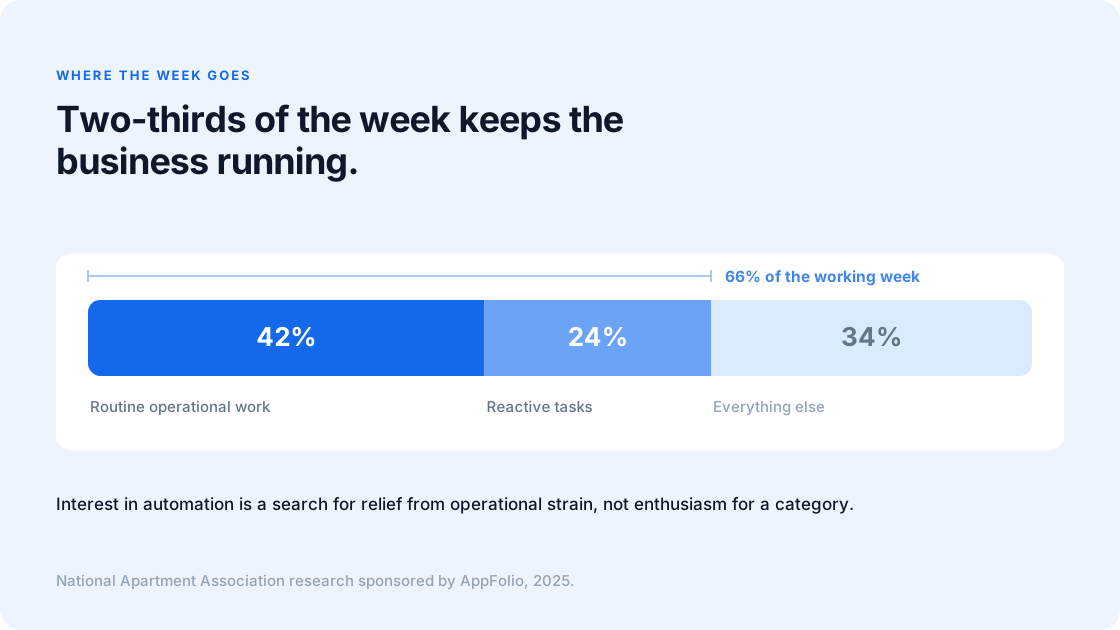
Operational efficiency remains the top challenge facing property management teams, and the time data explains why. Research from the National Apartment Association, sponsored by AppFolio, found that property management professionals spend 42% of their week on routine operational work and a further 24% on reactive tasks — roughly two-thirds of the working week spent keeping the business running rather than moving it forward.
In that context, interest in AI and automation is a search for relief from daily operational strain rather than enthusiasm for a new technology category.
- AppFolio and Buildium research shows that technology investments are evaluated primarily on whether they control costs and protect service quality. Tools that reduce manual work and stabilise operations consistently rank as the most valuable.
- Property Meld reports that after years of rapid experimentation, many operators are overwhelmed by tools that promise automation without meaningfully changing maintenance outcomes. Solutions that add complexity without improving accuracy, speed, or reliability are increasingly treated as noise.
For most operators, interest in AI is a signal of strain. What they are looking for is relief from rework, escalation, and coordination overhead.
Where Maintenance Performance Actually Improves
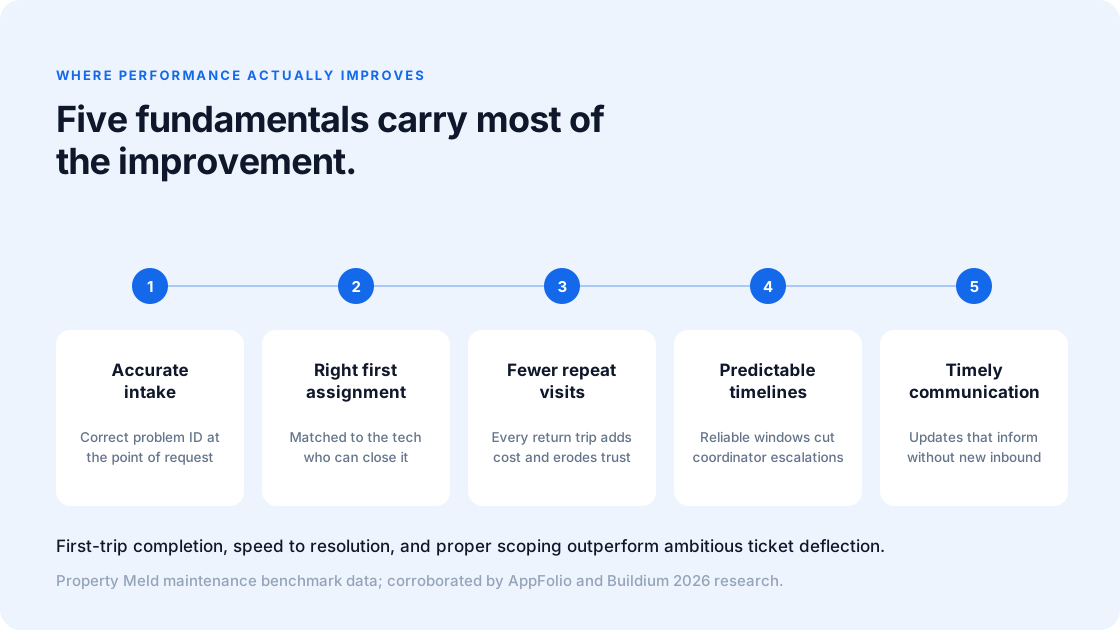
The largest gains in maintenance performance come from executing fundamentals consistently rather than from eliminating tickets or layering intelligence at the edges of existing workflows.
Five practices carry most of the improvement:
- Accurate intake and diagnosis: Correct problem identification at the point of request reduces misrouting and rework.
- Correct first assignment: Matching the request to the right technician or vendor on the first attempt avoids the cost of a second dispatch.
- Fewer repeat visits: Every return trip adds cost and erodes resident confidence.
- Predictable timelines: Reliable completion windows reduce escalations and follow-up effort from coordinators.
- Clear, timely communication: Progress updates that inform without generating additional inbound volume.
Property Meld’s maintenance data shows that outcomes improve most when intake is accurate, assignments are correct, and repairs are completed without unnecessary follow-ups. First-trip completion, speed to resolution, and proper scoping consistently outperform more ambitious attempts at ticket deflection.
Findings from AppFolio and Buildium point the same direction: predictability, visibility, and reduced rework matter more than broad automation as portfolios scale.
Maintenance as a Renewal Lever
Maintenance has long been treated as an expense to manage and minimize. Current industry data suggests that framing understates its effect on portfolio performance.
- Buildium’s research shows that maintenance is the single greatest source of stress for rental owners, ahead of leasing, accounting, and compliance.
- AppFolio’s findings reinforce that maintenance is a primary driver of day-to-day inefficiency, consuming a disproportionate share of staff time through reactive work and coordination overhead.
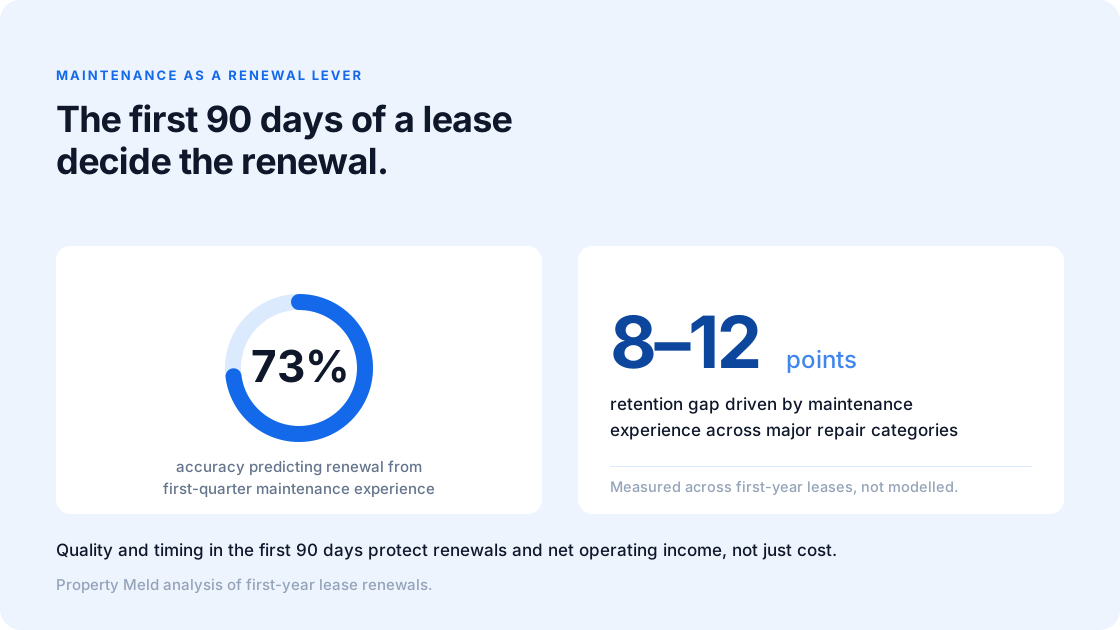
- Property Meld’s analysis of first-year lease renewals ties maintenance performance directly to leasing outcomes. Their research found that first-quarter maintenance experiences predicted renewal with 73% accuracy, and that maintenance experience drives an 8–12% retention gap across major repair categories.
The quality, accuracy, and timing of maintenance in the first 90 days of a lease plays a decisive role in resident retention and revenue. Operators who invest in reliability, consistency, and early failure prevention are protecting renewals and net operating income alongside controlling costs.
Cost pressure sharpens the point. Maintenance and repair expenses have risen steadily against a backdrop of higher labour, materials, and insurance costs, which narrows the margin for absorbing avoidable rework. Our guide to rental property maintenance costs covers the underlying expense data in detail.
Maintenance Operations as a Formal Discipline
Property Maintenance Operations (PMO) is the practice of managing maintenance with the same planning, measurement, and accountability applied to leasing or finance. The term was introduced by Property Meld to describe operators who have moved maintenance out of ad hoc coordination and into a managed function.
In a PMO model, maintenance roles are measurable, vendor performance is evaluated on outcomes, and benchmarks replace instinct. Standards apply across intake, assignment, execution, and follow-through.
Which maintenance software features deliver the best return
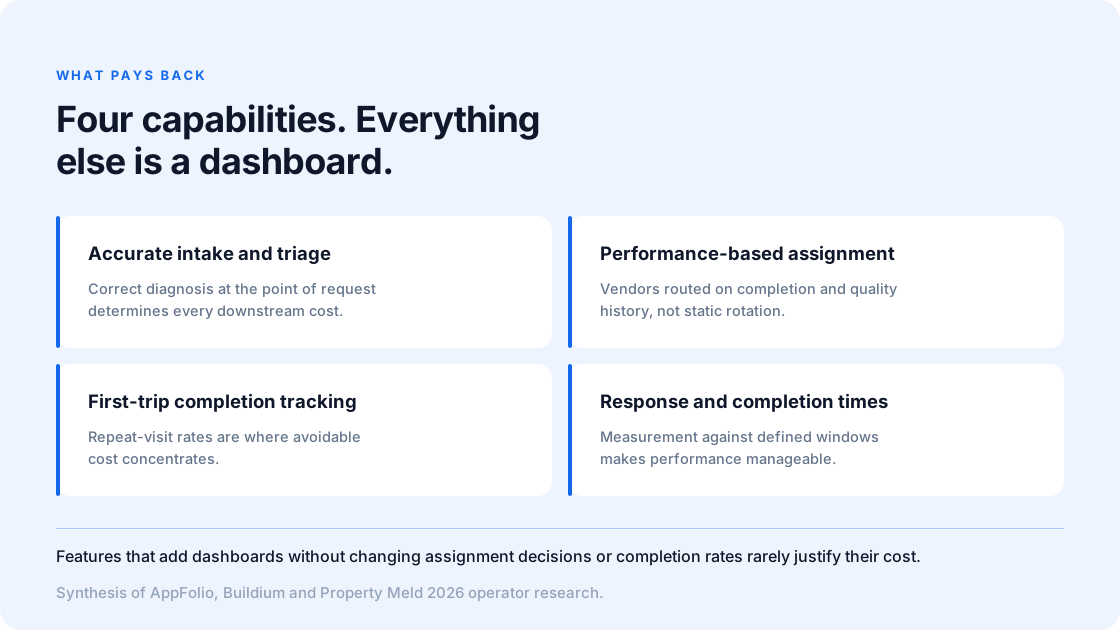
Operators evaluating maintenance technology consistently get the most measurable return from four capabilities:
- Accurate intake and triage: Correct diagnosis at the point of request, which determines every downstream cost.
- Performance-based vendor assignment: Routing work to vendors based on completion and quality history rather than static rotation.
- First-trip completion tracking: Visibility into repeat-visit rates, which is where avoidable cost concentrates.
- Response and completion time reporting: Measurement against defined windows, which is what makes performance manageable rather than anecdotal.
Features that generate additional dashboards without changing assignment decisions or completion rates rarely justify their cost.
Lula’s maintenance services are built around the assumption that maintenance cannot scale through coordination alone. It requires structure, standards, and accountability across intake, assignment, execution, and follow-through, supported by a vetted vendor network and defined after-hours coverage.
Operational Mastery Separates Leading Operators
The operators pulling ahead are those treating maintenance as a core operating function with measurable financial consequences, rather than those adopting the most technology.
This is a shift from experimentation to execution. Operators are prioritising systems, partners, and processes that make everyday work more reliable in practice: vendor assignment based on performance rather than rotation, visibility that supports decisions rather than overwhelming them, and systems that reduce the downstream consequences of small errors.
Reliability compounds. Every avoided second trip, correct first assignment, and met completion window protects a renewal that would otherwise be at risk.
Less noise. More predictable operations.
Join property operators getting practical insights on maintenance performance, renewals, and operational discipline. Sign up for our newsletter.
Anything found written in this article was written solely for informational purposes. We advise that you receive professional advice if you plan to move forward with any of the information found. You agree that neither Lula or the author are liable for any damages that arise from the use of the information found within this article
