 on August 12, 2026
Rental Property Maintenance Software
on August 12, 2026
Rental Property Maintenance Software Maintenance coordination is the communication and workflow system inside property maintenance services that carries every repair request from intake to completion. It connects triage, vendor routing, follow-up, and close-out so repairs move on schedule and residents know where things stand. When it fails, confusion, delays, and multiplying backlogs follow.
In mid-to-large portfolios, coordination is a high-volume job. Coordinators manage resident questions, scheduling constraints, not-to-exceed (NTE) limits, and after-hours escalation while balancing dozens or hundreds of open work orders. Many teams still run this communication-heavy process on fragmented tools: email, text, spreadsheets. Stalls, friction, and unclear ownership follow.
This guide covers what centralized coordination looks like in practice, the full request-to-resolution lifecycle, how to draw the line between property manager and resident responsibility, what separates a true emergency from an urgent job, and the documentation that protects you when a decision gets challenged.
What Is Rental Property Maintenance (and Maintenance Coordination)?
The Scope of Rental Property Maintenance
Rental property maintenance is the ongoing work required to keep single-family homes, small multifamily units, and other residential rentals safe, functional, and move-in ready. It covers day-to-day repair requests, preventive maintenance, make-ready work between occupancies, seasonal tasks, and emergency response.
The physical repairs happen on-site. Most of the effort goes into coordination: securing the right vendor, scheduling work, communicating with residents, and keeping jobs moving.
Coordination: The Operational Backbone
The coordination system is the operational backbone for residential rental maintenance. It keeps residents, vendors, and property managers aligned as work progresses.
When the process works, intake is accurate, jobs are prioritized, and residents receive timely updates that prevent tasks from aging in the system. Vendors stay accountable and maintenance records stay complete.
Strong maintenance coordination delivers:
- Clear, accurate intake and prioritization
- Reliable routing to the right vendor or technician
- Proactive communication that keeps residents informed
- Consistent progress checks to prevent delays
- Clean documentation for future reference and invoicing
Coordination is a workflow and communication function, which distinguishes it from adjacent tools. Work order software stores information about the job. A call center answers the phone and takes the message. Handyman supervision manages the person doing the work. Coordination owns the lifecycle that connects all three.
Coordination quality shows up directly in resident satisfaction, response times, vendor reliability, and operational efficiency.
Why Maintenance Coordination Breaks Down
Even experienced teams struggle because the process is high-volume and communication-heavy by nature. Breakdowns cluster around a few causes:
- Communication is fragmented across texts, emails, phone calls, and portals
- Triage decisions are inconsistent, producing misclassified urgency
- Vendors operate on different timelines, requiring constant follow-up
- No one has full visibility into aging work orders or stalled jobs
- After-hours volume overwhelms staff, undoing progress from the day
- Make-ready tasks involve multiple vendors, creating sequencing issues
- Coordinators are overloaded, slowing response times
These are structural causes rather than individual ones. Without centralized coordination, backlogs grow quickly, and residents lose confidence in the process.
The Maintenance Coordination Lifecycle (Request to Resolution)
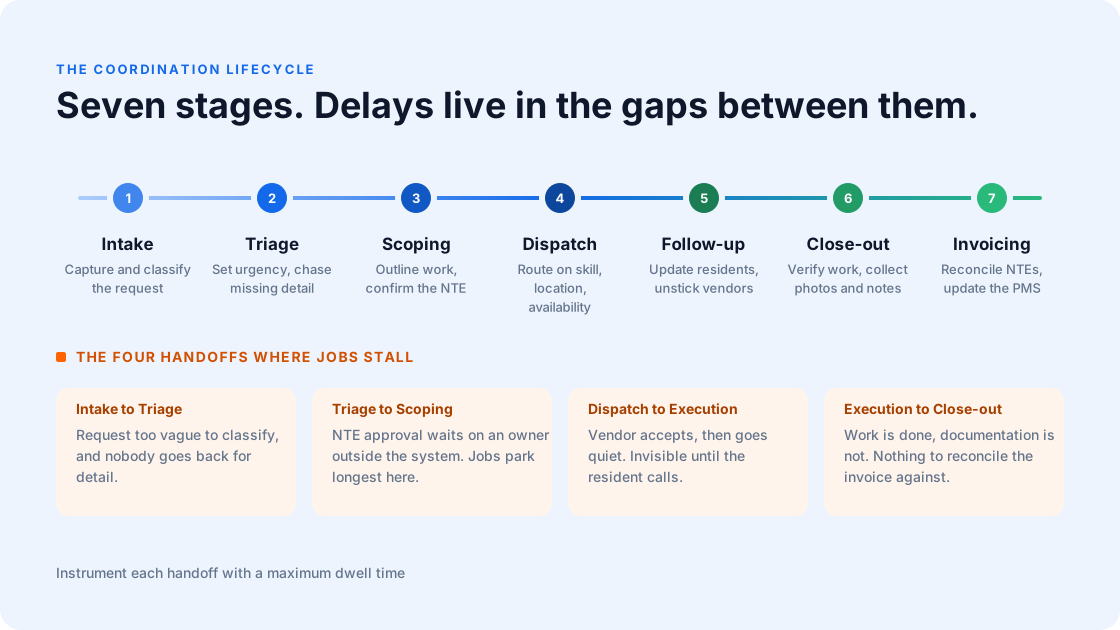
Every work order moves through the same core stages. Coordination is what connects them.
1. Intake
Capture the request and gather the information needed to classify the issue.
2. Triage
Determine urgency, clarify missing details, and confirm that true emergencies are prioritized.
3. Scoping and NTE Confirmation
Review photos or descriptions, outline the expected work, collect approvals, and confirm the not-to-exceed amount.
4. Dispatch and Vendor Assignment
Route the job to the appropriate technician or vendor based on skill, location, and availability.
5. Follow-Up and Progress Updates
Keep residents informed, confirm vendor progress, and intervene when jobs risk stalling.
6. Close-Out
Verify the work was completed correctly and collect photos, notes, and required documentation.
7. Invoicing and Record-Keeping
Reconcile NTEs, collect invoices, update the property management system (PMS), and maintain accurate maintenance history.
Where Jobs Actually Stall
Delays concentrate at the handoffs between stages rather than inside them. Four points account for most of it:
- Intake to triage, when the request arrives too vague to classify and nobody goes back to the resident for detail. The job sits waiting for information that was never requested.
- Triage to scoping, when an NTE approval needs an owner decision. Jobs park here longest, because the clock is running on someone outside the coordination system.
- Dispatch to execution, when a vendor accepts the job and then goes quiet. Without a scheduled check-in, the gap is invisible until the resident calls.
- Execution to close-out, when the work is done and the documentation is not. The job looks open in the system, and the record needed for invoicing does not exist yet.
Teams that instrument these four handoffs with a defined maximum dwell time find stalled jobs before residents do.
Who Is Responsible For What?
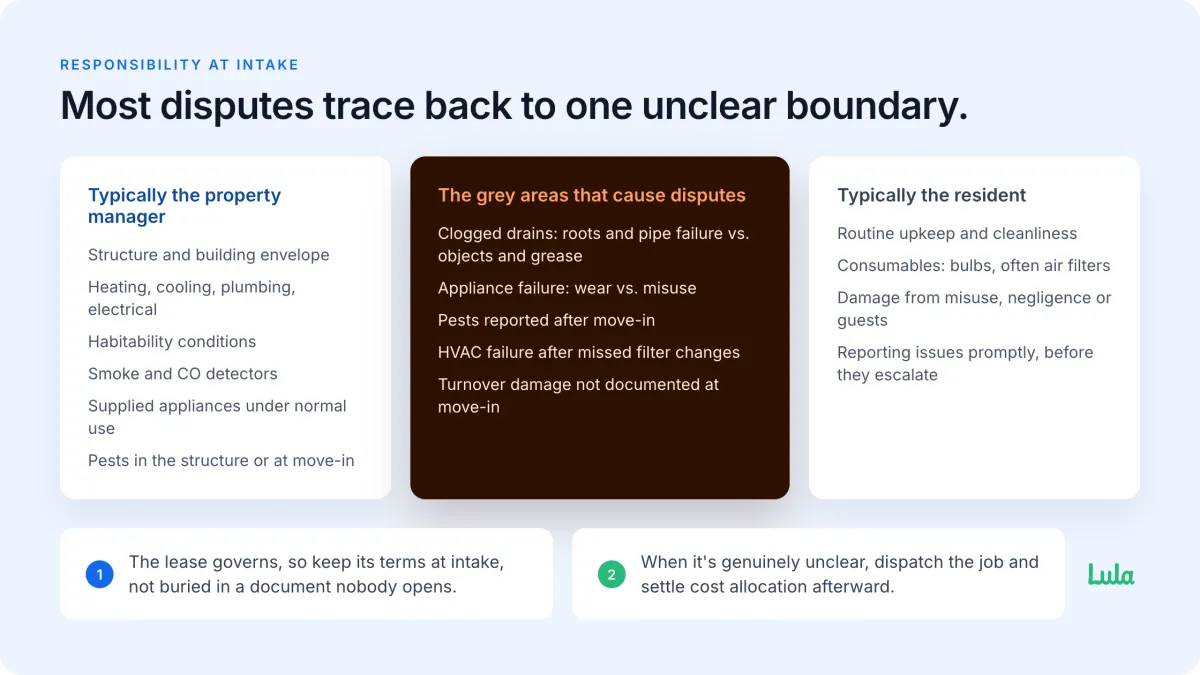
Most maintenance disputes trace back to an unclear responsibility boundary, and the coordinator is usually the person who has to make the call at intake. Getting it wrong in either direction costs money: absorbing a resident-caused repair erodes margin, and pushing back on a legitimate habitability issue creates a much larger problem.
Typically the property manager’s responsibility:
- Structural components and the building envelope
- Major systems: heating, cooling, plumbing, electrical
- Habitability conditions
- Safety equipment such as smoke and carbon monoxide detectors
- Appliances supplied with the unit, under normal use
- Pest issues affecting the structure or present at move-in
Typically the resident’s responsibility:
- Routine upkeep and cleanliness
- Consumables such as light bulbs and, in many leases, air filters
- Damage caused by misuse, negligence, or guests
- Reporting issues promptly, before they escalate
The grey areas that generate the most disputes:
- Clogged drains. Root intrusion and pipe failure sit with the property manager. Foreign objects and grease sit with the resident. The distinction is often only visible after the vendor is on site.
- Appliance failure. Normal wear against misuse, which usually cannot be determined from the request text alone.
- Pest activity after move-in. Frequently governed by the lease and by how quickly it was reported.
- HVAC failure following missed filter changes. Shared responsibility in practice, and a common source of friction.
- Damage discovered at turnover. The dividing line is whether it was documented at move-in, which is why inspection records matter.
Two operational rules keep this manageable. First, the lease governs, so coordinators need the responsibility terms available at intake rather than buried in a document nobody opens. Second, when responsibility is genuinely unclear, dispatch the job and determine cost allocation afterward. Delaying a repair to settle an argument turns a small cost question into a habitability problem.
Landlord and tenant obligations vary by state and municipality, and some conditions carry statutory requirements that override lease terms. Treat the categories above as an operational starting point and confirm the specifics for each jurisdiction you operate in.
What Counts as an Emergency?
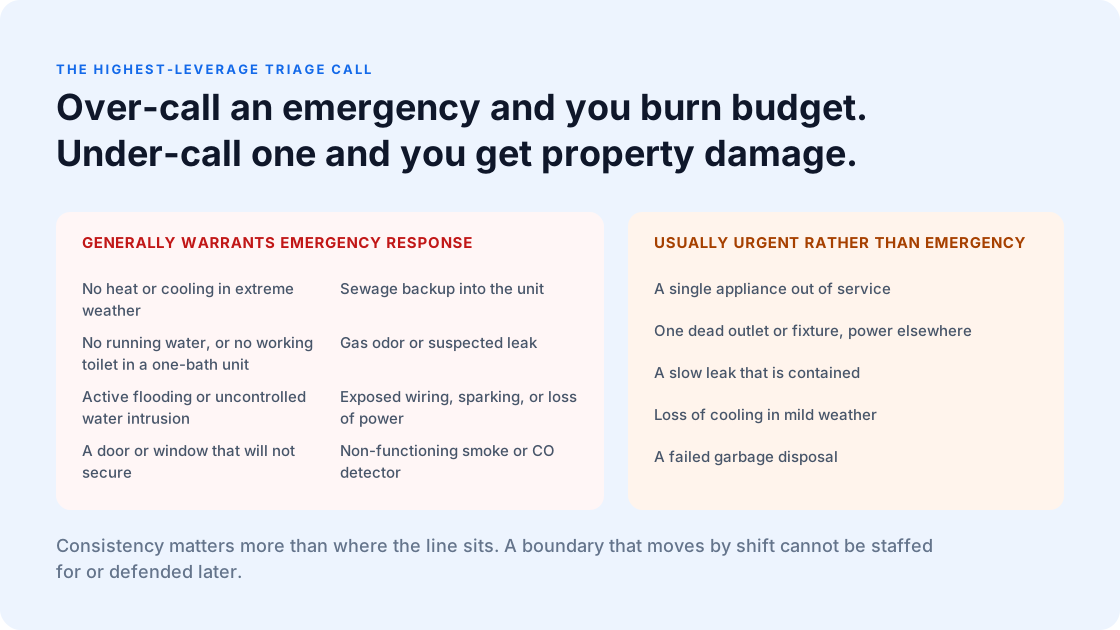
Emergency classification is the single most consequential triage decision, because it determines after-hours dispatch, premium vendor rates, and resident expectation all at once. Inconsistent classification is expensive in both directions: over-calling emergencies burns budget on premium callouts, and under-calling them turns a contained problem into property damage or a liability claim.
Conditions that generally warrant emergency response:
- No heat or no cooling during extreme weather
- No running water, or no working toilet in a single-bathroom unit
- Sewage backup into the unit
- Gas odor or a suspected gas leak
- Active flooding or uncontrolled water intrusion
- Exposed wiring, sparking, or loss of power to the unit
- A door or window that will not secure
- A non-functioning smoke or carbon monoxide detector
Conditions that are usually urgent rather than emergency:
- A single appliance out of service
- One non-working outlet or fixture with power elsewhere in the unit
- A slow leak that is contained
- Loss of cooling in mild weather
- A failed garbage disposal
Write the criteria down and make them the same for every coordinator on every shift. Consistency matters more than where exactly the line sits, because a boundary that moves depending on who took the call cannot be planned around, staffed for, or defended later.
Documentation That Holds Us
Coordination produces the record that answers questions months later: a security deposit dispute, an insurance claim, an owner challenging an invoice, a habitability complaint. The record has to be built during the job, because it cannot be reconstructed afterward.
At minimum, capture:
- At intake: timestamped request, reporting method, resident’s description in their own words
- At triage: urgency classification and the reason for it
- At scoping: photos before work begins, the NTE amount, and who approved it
- At dispatch: vendor assigned, scope communicated, scheduled window
- During the job: resident communication log, including attempted contacts
- At close-out: completion photos, vendor notes, parts and labor detail, resident confirmation
The most common failure is closing a job on the vendor’s word without the completion record. The work order shows resolved, the invoice arrives, and there is nothing to reconcile it against.
Photographs matter more than notes. A dated image of the condition before work started settles most disputes that written descriptions cannot.
What Modern Maintenance Coordination Should Include
Modern coordination consolidates a process that usually lives across too many channels. Requests, updates, and documentation stay in one place rather than scattered across email, text, and portal messages.
A strong process applies consistent triage so every request is evaluated the same way, which reduces misclassified emergencies and unnecessary delays. It supports reliable routing and scheduling whether the work goes to an in-house technician or an outside vendor, so the right person gets the job with clear expectations.
Proactive communication carries equal weight. Residents should know what is happening, vendors should understand next steps, and coordinators should not have to chase updates to keep work moving. Behind the scenes, good coordination keeps photos, notes, approvals, and invoices organized for later reference.
Coordination also has to scale when volume spikes and hold order during make-ready periods, where multiple tasks and vendors need to stay in sequence.
Key Outcomes Property Management Companies Should Expect
When maintenance coordination is structured and consistent, the impact shows up quickly. Work orders move without stalling, backlogs shrink, and residents receive clearer communication throughout. Vendors arrive on time, update more reliably, and complete jobs with fewer second visits.
Maintenance managers and coordinators spend less time chasing information and more time on higher-value work. Regional managers gain visibility into what is open, what is aging, and where support is needed. Cleaner documentation reduces billing disputes and keeps maintenance history accurate.
In practice, strong coordination produces:
- Fewer aging work orders and smaller backlogs
- Faster response and completion times
- Fewer resident status-check calls
- Vendors who provide consistent updates and reliable turnaround
- Lower friction for coordinators and onsite teams
- Clear operational visibility for regional managers
- Cleaner invoices and fewer billing questions
- Steadier operations during high-volume periods
Stronger coordination also protects retention. Zillow’s 2025 Consumer Housing Trends Report found that 68% of tenured US renters cited a well-maintained property as a reason for staying. It ranked as the fourth most common reason among renters who stayed.
Coordination stabilizes the entire maintenance operation, which supports more predictable service as the portfolio grows.
How Lula Supports Modern Maintenance Coordination
Lula gives property managers a structured coordination system that strengthens the maintenance lifecycle without adding headcount or changing how teams work.
Coordination That Keeps Work Moving
Lula acts as an extension of your team, handling the day-to-day communication and follow-up that keeps work orders progressing. Updates, documentation, and communication live in one place while Lula manages the coordination tasks that consume most of your team’s day.
Coordination covers:
- Centralized communication with residents and vendors
- Standardized triage and information gathering through LuMi
- Reliable routing and scheduling support
- Proactive progress updates so jobs do not stall
- Accurate close-out notes, photos, and documentation
- Clean, consistent records that sync with your PMS
Coverage That Scales With Your Portfolio
Coordination capacity adjusts to what your portfolio demands. Rapid growth, seasonal spikes, and after-hours volume are absorbed by trained coordinators and extended coverage hours, so property managers gain bandwidth without increasing internal staffing.
Coverage scales across:
- Evening, weekend, and around-the-clock hours when your portfolio needs them
- Capacity that flexes with volume, so busy periods stay consistent
- Trained coordinators who work inside your existing process
Lula vs. Traditional Coordination Models
Property management companies use a range of approaches to keep maintenance moving, and each provides a different level of structure, visibility, and support. Lula offers a blended model that fills the operational gaps left by software-only tools, call centers, and fully in-house coordination.
| Model | Strengths | Limitations | Where Lula fits |
|---|---|---|---|
| Work order software | Tracks requests and stores history | No follow-up, no scheduling support, no vendor accountability | Lula provides the communication and workflow management that software does not cover |
| Call centers | Quick intake and phone coverage | Limited troubleshooting, no lifecycle management, no vendor follow-through | Lula manages the full coordination lifecycle beyond message-taking |
| In-house coordinators | Deep familiarity with properties and residents | Capacity peaks quickly; after-hours is unsustainable; workflows vary by person | Lula adds structure and bandwidth alongside existing staff |
| Vendor-direct approach | Fast when the vendor is reliable | Inconsistent updates, unclear timelines, no standardized triage | Lula provides consistent communication, follow-up, and centralized visibility |
| Lula | Structured triage, communication, scheduling support, follow-up, documentation, vendor coordination, flexible coverage | A coordination system that supports teams and scales with the portfolio |
Lula works alongside your existing tools and people, absorbing the communication and coordination workload that traditional models struggle to manage at scale.
How Lula Integrates With Your Property Management System
Lula fits into a property manager’s existing maintenance workflow. Integrations keep every work order updating cleanly across systems, so teams avoid duplicate effort and scattered information.
With Lula connected to your property management software, teams get:
- Two-way syncing that keeps work orders, resident details, and status updates aligned
- Accurate intake with the correct unit and resident linked from the start
- Real-time status visibility as jobs progress
- Clean documentation: photos, notes, and invoices stored where you already work
- Fewer manual updates, reducing administrative load on coordinators
- Reliable maintenance history that supports reporting, audits, and future planning
Integrations let Lula enhance your current process without a new platform, new workflows, or major operational changes.
Creating a Maintenance Operation That Scales
Maintenance coordination is one of the most important and most complex parts of property management. When it works, repairs move smoothly, residents stay informed, and vendors stay accountable. When it breaks down, simple issues become backlogs, missed updates, and strained relationships.
A modern coordination process brings structure to every step, helping teams stay ahead of volume and deliver more predictable operations across the portfolio. Clear responsibility boundaries, consistent emergency criteria, and documentation captured during the job are what make that structure hold under pressure.
Lula gives property managers a coordinated system that keeps work moving, absorbs high-volume periods, and scales with growth, without adding headcount or changing the tools teams already use.
If you are ready for a maintenance process that runs predictably, Lula can help. Request a demo to see how Lula fits into your workflow.
Rental Property Maintenance FAQs
How does maintenance coordination reduce maintenance costs?
Coordination controls how fast issues are identified, prioritized, and resolved. When it is consistent, routine tasks and small repairs get handled before they escalate into costly damage such as mold growth from an untreated leak or electrical failure after a delayed inspection.
Coordinators also prevent duplicate vendor dispatches, reduce repeat visits through better scoping, and help property managers track expenses across properties. Clear communication, detailed records, and reliable contractor management produce the cost efficiency that supports steady rental income and long-term asset protection.
How does preventive maintenance fit into a coordination process?
Preventive maintenance works best coordinated as part of a broader strategy rather than treated as an occasional task. Property managers use it to extend the lifespan of major systems: HVAC units, cooling systems, plumbing components, and electrical systems, while reducing unexpected failures and urgent repairs.
Coordinating these into a documented schedule ensures air-filter changes, smoke detector checks, seasonal inspections, and equipment servicing happen on time. That reduces disruption, improves resident satisfaction, and helps preserve property condition.
What should coordinators track during an emergency request?
Emergency coordination requires a reliable escalation process, clear communication, and immediate access to qualified contractors. Track progress in real time, update the resident during the repair, and document each step, including attempted contacts and the reason for the urgency classification.
How should maintenance responsibilities be communicated to residents?
Define responsibilities in the lease and reinforce them through ongoing communication. Residents should know what the property manager handles, what they are responsible for, and exactly how to submit a request. Setting that expectation at move-in prevents most disputes later, and it is far easier than settling the question during an active repair.
Anything found written in this article was written solely for informational purposes. We advise that you receive professional advice if you plan to move forward with any of the information found. You agree that neither Lula or the author are liable for any damages that arise from the use of the information found within this article
