 on June 5, 2026
Announcements
on June 5, 2026
Announcements 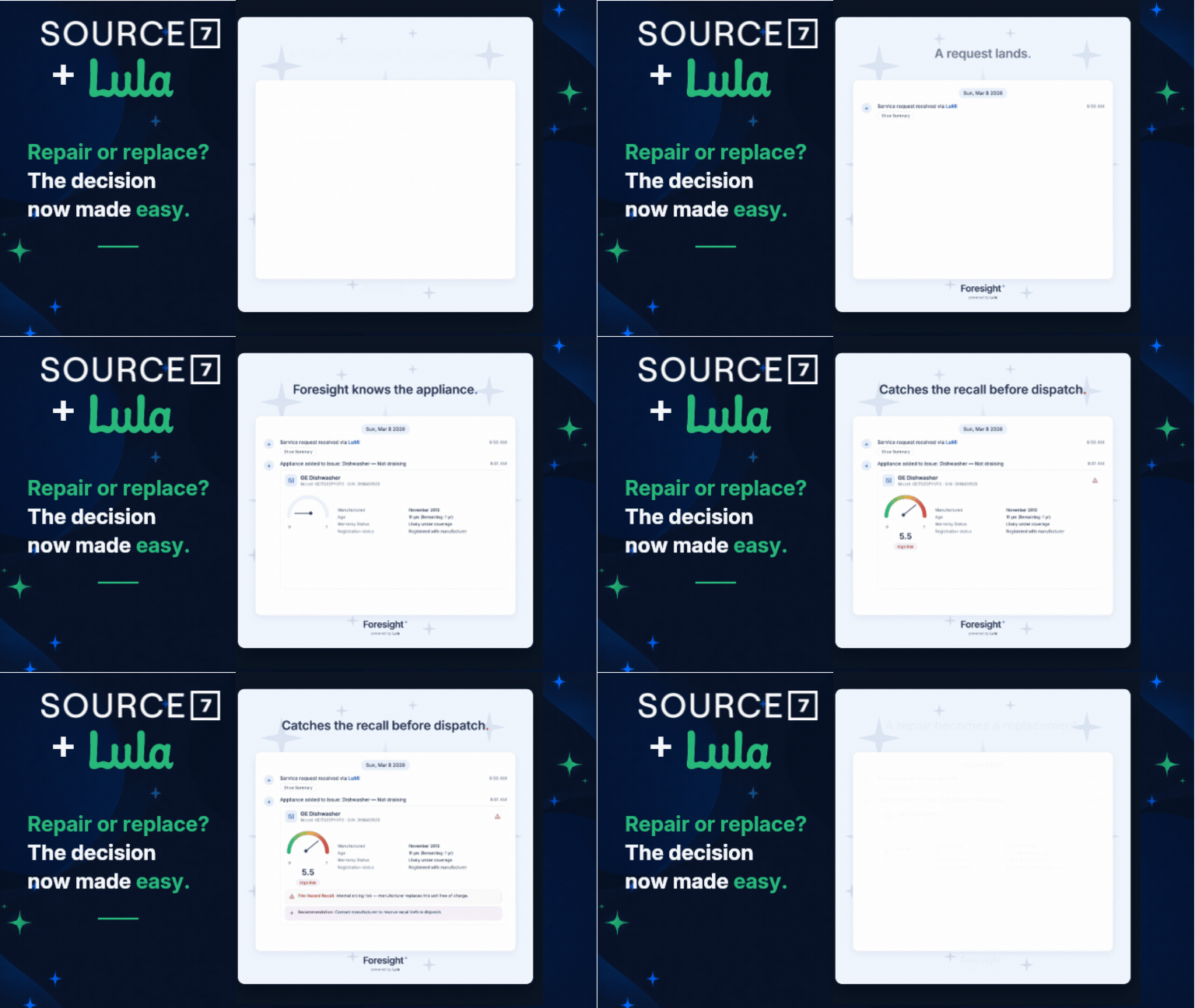
A fridge stops cooling in an occupied unit. Your coordinator dispatches a tech, who calls back with a quote: the compressor’s gone, the repair runs a few hundred dollars, and the unit’s been in service a while. So what’s the move? Approve the repair and hope it holds, or eat the bigger cost of a replacement now?
For most property teams, that’s a gut call made under time pressure with whatever information is on the work order. The fridge gets fixed. Six weeks later it fails again, and you’ve paid twice for an appliance that was already past its useful life.
That guesswork is what the expanded Source7 and Lula partnership is built to remove.
What’s Changing
Source7 and Lula have renewed and expanded their partnership under a new multi-year agreement, and the headline for property teams is the deeper integration of Source7’s appliance and equipment intelligence directly into Foresight, Lula’s AI-powered maintenance operations platform.
Source7 specializes in one thing: turning the unstructured data trapped on a manufacturer’s label—make, model, age, specs for HVAC units, water heaters, and appliances—into structured asset intelligence. Lula runs the maintenance operations: AI work order triage, scheduling, technician management, and the workflows your team lives in every day.
Put those together and the asset data shows up where the decision actually gets made: inside the work order, at the moment your team is deciding what to do about it.
Why Repair-vs-Replace Is So Expensive to Get Wrong
The repair-or-replace question looks small on a single ticket. Across a portfolio, it’s one of the costliest decisions in maintenance.
Source7’s read on the single-family rental market is blunt: more than 80% of reactive maintenance on HVAC, water heaters, and appliances gets prioritized as urgent or emergency, and only about 20% is routine. Reactive work is the expensive kind. By Source7’s estimate, resolving a reactive ticket typically costs well over twice what the same fix would have cost handled proactively, once you add up the multiple trips to scope, source a part, and return, plus retail pricing on parts, spoiled groceries, and the hit to the resident’s experience.
The default behavior makes it worse. Source7 has a name for it: “Leave-it Larry,” the tech who fixes whatever’s in front of him even when the appliance is sixteen years old and well past replacing. Without data on the asset, every repair looks reasonable in the moment.
The same blind spot shows up in budgeting. Source7 estimates that fewer than 1% of property managers do anything more rigorous than adding a few hundred basis points to last year’s number when they forecast next year’s CapEx. That’s not a forecast. It’s a guess with a decimal point.
How the Source7 Integration Works Inside Foresight
The integration brings enriched appliance and equipment intelligence into Foresight’s existing workflows, so the asset’s full picture travels with the work order instead of living on a sticker behind the unit.
When a request comes in, Foresight already handles the triage, routing, and scheduling. With Source7 data layered in, the platform also knows what it’s dealing with: the appliance’s age, its risk profile, and where it sits in its useful life. That context turns a blind repair-or-replace call into an informed one, and it does it without your coordinator chasing down a model number or guessing at install dates.
“Our customers have come to expect fast, intelligent data and guidance from Lula,” said Bo Lais, Co-founder and CEO of Lula. “With the Source7 integration into Foresight, property managers can have full confidence in making the decision of whether to repair or replace household appliances.”
Source7 frames it as taking the guesswork out of the daily workflow. “By combining our structured asset data with Lula’s AI maintenance platform, Foresight, we are eliminating the guesswork from maintenance operations,” said Brian Webb, President of Source7, “helping property teams make faster, smarter decisions that lower costs and improve efficiency across their portfolios.”
What This Means for Your Portfolio
The practical payoff is fewer bad repair calls and fewer callbacks. When your team can see that a unit is near end-of-life before approving a repair, the obvious move is to replace it once instead of patching it twice. That keeps a reactive ticket from turning into two reactive tickets, and it spares the resident a second failure.
There’s a longer game here too. Structured asset data across a portfolio is the foundation for shifting work from reactive to proactive—catching the aging water heater at unit turn or a property walk rather than at 9pm on a Saturday. It’s also what a real CapEx forecast is built on, instead of last year’s number plus a guess.
“This is a big win for our customers,” said Will Parrish, Co-founder and Chief Customer Officer of Lula. “Knowing when it makes sense to perform a repair versus a replacement can keep costs in check and reduce the number of callbacks to a unit.”
Available Now
The expanded Source7 intelligence is rolling into Foresight as part of the renewed partnership, across both single-family and multifamily residential rental portfolios. If you’re already running Foresight, this enriches the work order data you’re working with. The decisions just get easier.
If you’re not on Foresight yet and your team is still making repair-or-replace calls on instinct, this is the part worth a closer look. See how Foresight works, and stop paying twice for the same fridge.
Anything found written in this article was written solely for informational purposes. We advise that you receive professional advice if you plan to move forward with any of the information found. You agree that neither Lula or the author are liable for any damages that arise from the use of the information found within this article
