 on July 2, 2026
Property Management Articles
on July 2, 2026
Property Management Articles When residents move into a rental property, they expect the essentials to work. Refrigerators that keep food fresh, stoves that function reliably, and dishwashers that clean as promised are more than conveniences—they are part of what makes a rental unit livable.
When an appliance breaks or stops working as expected, the way a property manager responds has a direct impact on resident satisfaction, overall reputation, and in some cases legal compliance. That’s why property managers need a clear, consistent appliance replacement procedure.
Why Appliance Replacement Procedures Matter
Many property managers rely on a reactive approach—waiting for something to break before scrambling to find a replacement. This often means overpaying for last-minute purchases, dealing with delivery delays, and managing frustrated residents in the meantime, all the while operating without transparency as to where the replacement is or if it’s been installed.
A standardized procedure helps property managers:
- Control costs by working with preferred vendors and standard appliance models
- Maintain expectations by working with preferred vendors on a standard protocol for installs and removals
- Save time by eliminating the chaos of last-minute decision-making
- Improve resident satisfaction by responding quickly and transparently
Most importantly, standardizing your appliance replacements helps protect property owners from unnecessary risks. A broken refrigerator, for instance, can lead to food spoilage claims or emergency reimbursements. A leaking dishwasher can cause water damage and mold. And a malfunctioning stove can become a safety hazard. Having a structured, proactive plan avoids these pitfalls.
Resident Satisfaction and Retention
The way appliance failures are handled plays a major role in whether residents renew their lease or move on. If a refrigerator goes down and weeks pass before it’s replaced, residents often leave negative reviews and begin searching for a new home. On the other hand, when property managers act quickly and communicate clearly, residents see that their needs are prioritized. This trust builds loyalty, increases renewals, and boosts online reputation—outcomes every property manager should value.
DOWNLOAD Lula’s Refrigerator Replacement Program Detail Sheet
How Long Appliances Last (and When Replacement Beats Repair)
Every replacement decision starts with two numbers: how old the unit is, and what the repair costs against a new one. The common rule: if the repair costs more than half the price of a new unit and the appliance is past the midpoint of its expected life, replace it.
| Appliance | Typical lifespan | Replace instead of repair when… |
|---|---|---|
| Refrigerator | 10–15 years | Compressor or sealed-system failure after year 8 |
| Dishwasher | 9–12 years | Pump, motor, or control board failure after year 6 |
| Range/stove | 13–15 years | Control board or element failure on older units |
| Washer | 10–12 years | Transmission or bearing failure after year 7 |
| Dryer | 10–13 years | Motor or drum failure after year 8 |
| Water heater | 8–12 years | Any tank leak. Always replace, never repair a leaking tank |
Track install dates by unit in your property management software. An appliance age report turns replacement from an emergency into a budget line.
Bulk Appliance Replacement Across a Portfolio
Replacing appliances one emergency at a time is the most expensive way to do it. Property managers running 200+ units get better outcomes buying in volume:
- Standardize on 2–3 models per appliance type: Same dishwasher across the portfolio means predictable parts, faster installs, and one spec for every make-ready.
- Batch end-of-life replacements: If 15 dishwashers across your portfolio are past year 10, replacing them in one coordinated program costs less per unit than 15 emergency calls.
- Negotiate delivery and haul-away as one contract: Removal, hook-up, and disposal are where one-off replacements bleed time.
Lula’s Refrigerator Replacement Programs
Recognizing the critical importance of quick response times, Lula has developed two refrigerator replacement programs designed specifically for property managers who want reliability, speed, and resident satisfaction.
Lula’s Standard Refrigerator Replacement Program
Our standard replacement program offers GE appliances delivered with full removal, hook-up, and installation within 5–7 days. This ensures property managers can quickly replace broken refrigerators without the stress of vendor delays or uncoordinated installations. Every replacement is handled by a Lula Refrigerator Certified Installer, ensuring professional service and a seamless experience for residents.
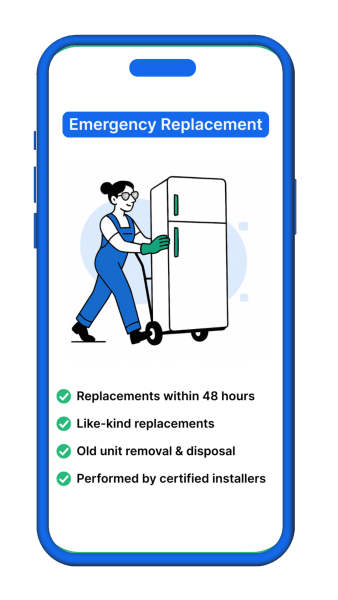 Lula’s Emergency 48-Hour Refrigerator Replacement Program
For situations where waiting isn’t an option, Lula now offers an emergency refrigerator replacement program. With this option, property managers can have a like-kind refrigerator fully installed within 48 hours. Just like our standard program, Lula handles the removal of the old unit and installation of the new appliance, but now with the speed necessary to keep residents comfortable and satisfied.
This rapid-response solution gives property managers peace of mind and ensures that one of the most critical appliances in any rental unit is never out of service for long.
Proactive Management Pays Off
Appliances are part of the long-term value of a rental property. Well-maintained, modern refrigerators and other appliances improve the marketability of a unit, support higher rental rates, and reduce turnover. For property owners, Lula’s programs mean less risk of resident disputes and a consistent standard of quality across all managed properties.
By partnering with Lula, property managers can shift from a reactive approach to a proactive strategy that preserves asset value, strengthens resident relationships, and enhances operational efficiency.
Having a detailed and consistent appliance replacement procedure isn’t just about keeping appliances running—it’s about protecting investments, delivering a positive resident experience, and building a reputation for reliability. Lula’s Standard Appliance Replacement Program and Emergency 48-Hour Replacement Program give property managers the tools to handle one of the most common maintenance challenges with speed, professionalism, and confidence.
In today’s rental market, where resident satisfaction drives renewals and reputation, proactive appliance management isn’t optional—it’s essential.
Frequently Asked Questions
Do landlords have to replace broken appliances?
If the lease includes the appliance, yes. In most states, appliances provided with the unit must be maintained in working order, and habitability rules can apply to refrigerators and stoves. Check your state’s landlord-tenant statutes; timelines vary.
How fast should a broken refrigerator be replaced?
Within days, not weeks. Residents lose food immediately, and spoilage claims often cost more than expedited replacement. Lula’s emergency program installs a like-kind refrigerator within 48 hours; the standard program runs 5–7 days.
Should property managers repair or replace an appliance?
Replace when the repair exceeds 50% of the cost of a new unit and the appliance is past half its expected lifespan. Repairing a 12-year-old refrigerator’s compressor is spending good money on a dead asset.
Who pays for appliance replacement — the owner or the property manager?
The owner, in almost all management agreements. The property manager’s job is controlling the cost: standardized models, pre-negotiated vendor pricing, and a documented approval threshold so replacements under a set dollar amount don’t stall waiting for sign-off.
Anything found written in this article was written solely for informational purposes. We advise that you receive professional advice if you plan to move forward with any of the information found. You agree that neither Lula or the author are liable for any damages that arise from the use of the information found within this article
