 on September 11, 2026
Property Management Articles
on September 11, 2026
Property Management Articles Property management teams running on disconnected platforms spend more time on administration than they should. A work order submitted in one system requires manual entry in another. Financial updates from a vendor invoice don’t reach the property management ledger until someone moves them. Owner reports get assembled from exports that are already outdated.
This is the problem property management automation solves. The best property management software for automation in 2026 is an operational hub working in concert with specialized partners, each handling one area of the workflow at depth, with data moving between them automatically.
This guide covers six tools that make up that integrated stack, how they fit together, and what to evaluate when building your own. Platforms selected based on integration ecosystem depth, portfolio scale fit, and coverage across leasing, accounting, operations, and maintenance.
What Is Property Management Automation?
Property management automation is the use of connected software to handle repetitive operational tasks, such as work orders, rent collection, owner statements, and maintenance dispatch, without manual re-entry between systems.
The key word is connected. A single platform automating tasks inside its own walls is only half the job. Real automation happens when your system of record and your specialized tools share data automatically, so a work order raised in one place updates the ledger in another without anyone retyping it.
For a growing portfolio, that difference compounds. Every manual hand-off is a chance for a number to be wrong, a status to go stale, or an owner report to ship with old data. Automation removes the hand-off, which is where most of the errors and the wasted hours live.
The rest of this guide covers the six tools that make that connected stack work, and how to evaluate your own.
The 6 Best Automation Tools for Property Management Teams (2026)
These platforms are categorized by their primary role within an integrated tech stack. A hub handles core operations. Specialized partners automate specific workflows within that hub.
1. AppFolio: The Central Operational Hub
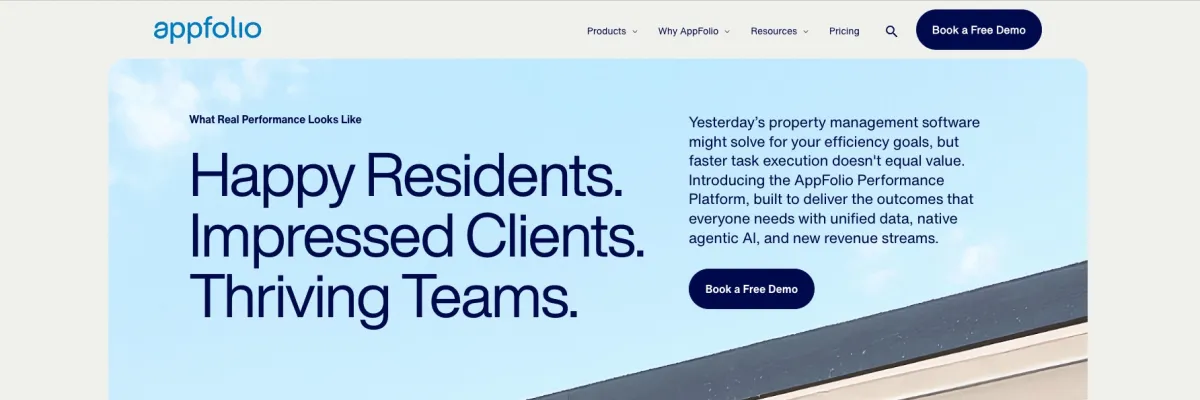
AppFolio functions as the central system of record for resident data, financials, and property information. AppFolio describes itself as a real estate Performance Platform, one architecture where data, AI-driven recommendations, and workflows operate in a single system rather than across separate databases.
The AppFolio Stack™ Marketplace extends that architecture to specialized partners. Where AppFolio handles the breadth of portfolio operations, integration partners go deeper on specific functions. Lula integrates with AppFolio through the Stack Marketplace, connecting maintenance workflows directly to the property management system of record.
2. Lula: Property Management Maintenance Automation
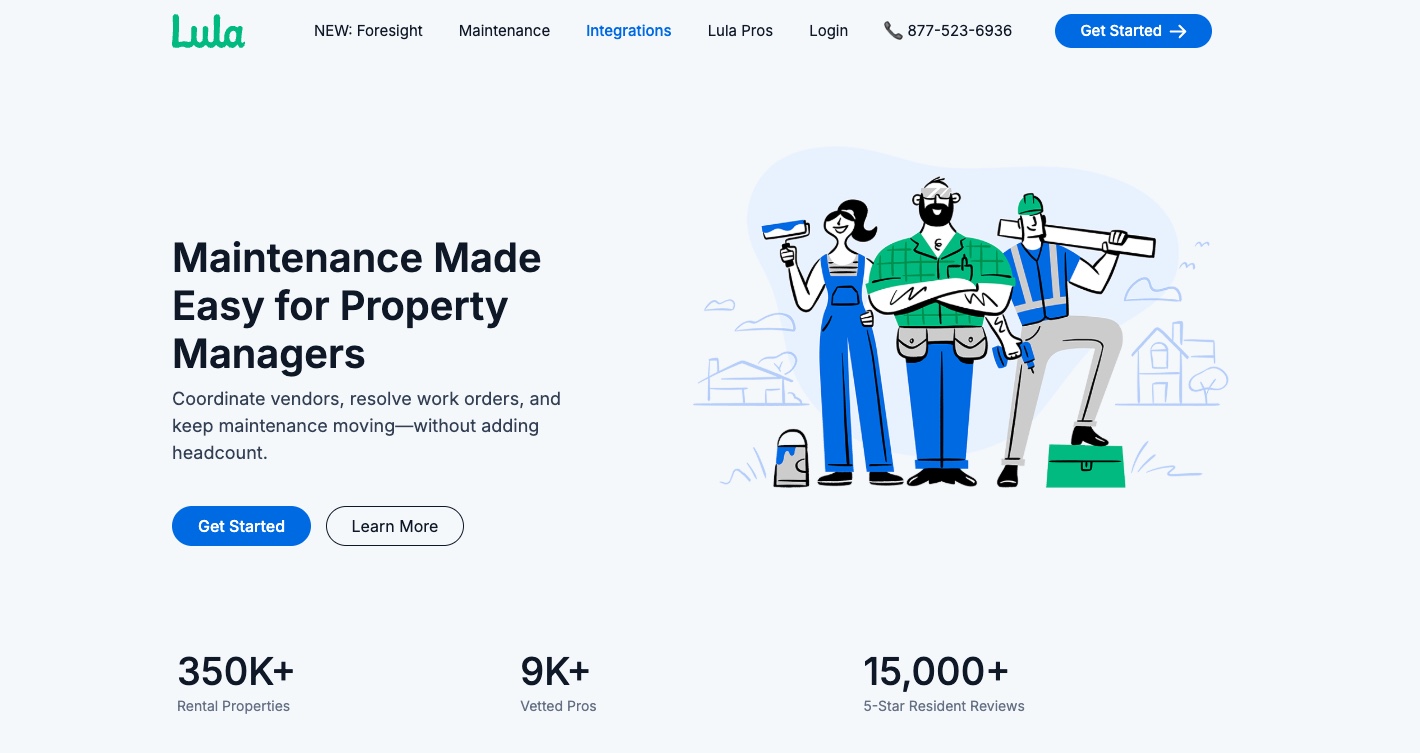
Lula property maintenance is a specialized maintenance tool that integrates directly with operational hubs including AppFolio and Rent Manager through a direct AppFolio integration. It covers the full maintenance coordination lifecycle: resident request, intake, triage, vendor dispatch, scheduling and payment.
Lula’s maintenance coordination achieves property management maintenance automation through automated work order intake, removing manual steps such as re-entering work order data or tracking status updates across separate systems.
For growing rental portfolios, Lula provides automation, visibility, and a built-in network of vetted Pros, all licensed and insured, on a per-job model with flat-rate pricing and no subscription fees for property managers. Lula runs on a network of 9,000+ vetted, licensed, insured Pros across 50+ US markets, processed 125,000+ work orders in 2025, and schedules jobs within 24 hours.
3. Buildium: Accounting Depth and Scalability
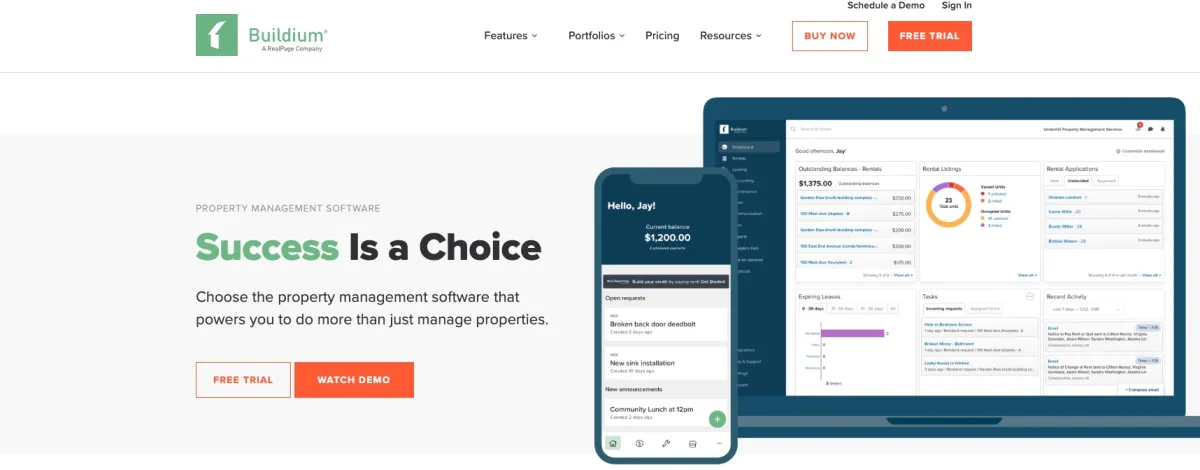
Buildium provides automation capabilities, particularly for accounting and financial tracking for scaling portfolios. It is often considered a strong option for small to mid-sized property management companies.
Its core benefit is allowing managers to automate complex financial reporting and ensure compliance. Buildium offers a comprehensive suite of features, including accounting, analytics, and maintenance and inspection tracking.
4. Rent Manager: Customization and AI Capabilities
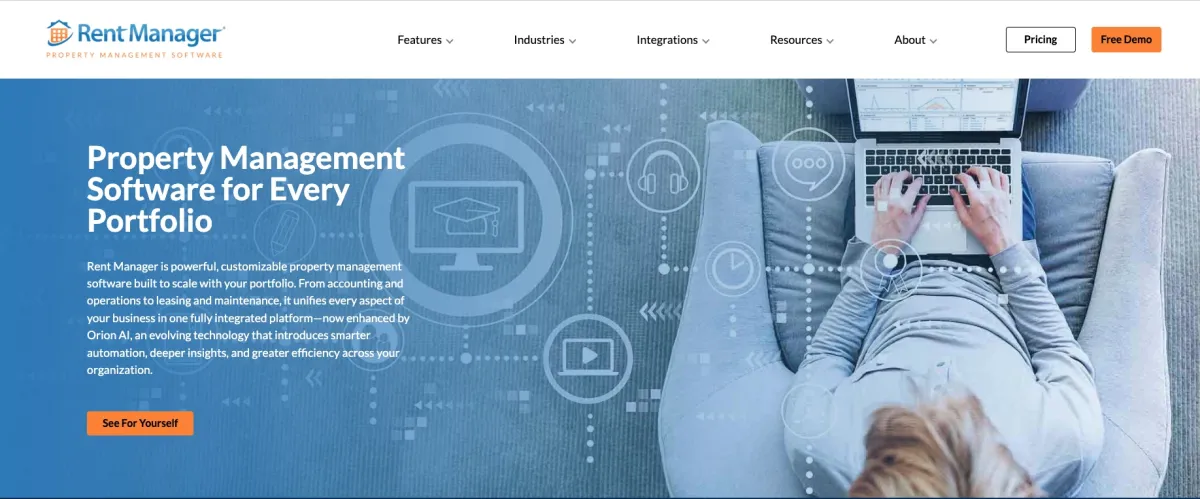
Rent Manager is known for its high flexibility and customization, offering a platform tailored to complex operations. It provides advanced features, including online rent collection, owner payments, and detailed reporting.
The platform is noteworthy for its use of AI-powered features, including maintenance integration with Lula.
5. Propertyware: Enterprise Portfolio Operations
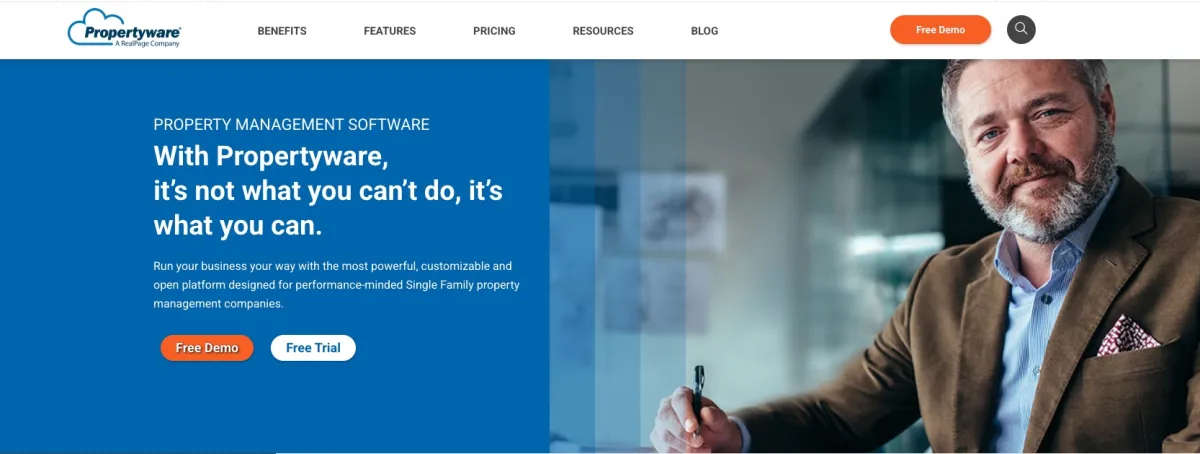
Propertyware targets large portfolios and enterprise operators, with particular depth in single-family residential management. Its automation focus is on recurring, high-volume tasks: lease renewals, compliance tracking, and inspections.
For enterprise teams running portfolios at scale, Propertyware’s consistency-first approach, standardized workflows across a large unit count, reduces the variation and errors that come with scale.
6. Rentvine: Modern Platform for Operational Efficiency
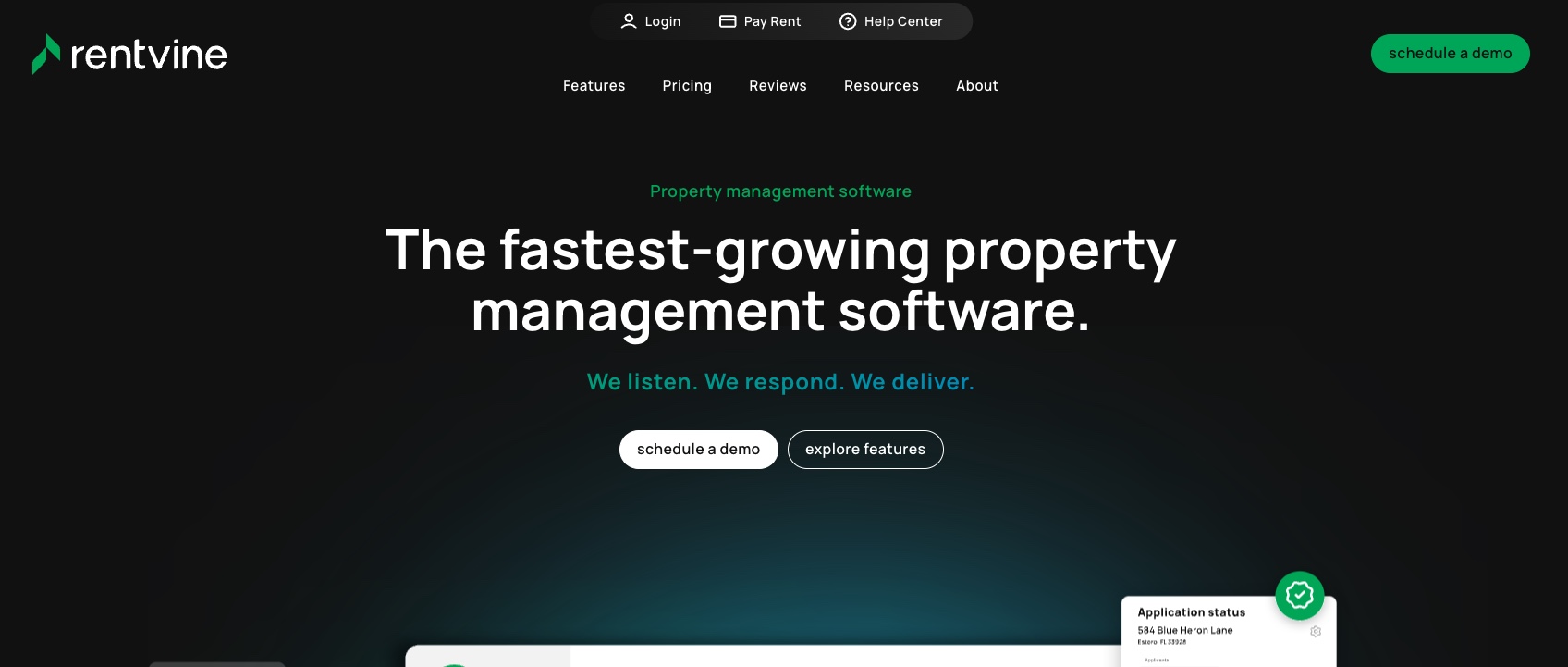
Rentvine offers a modern, comprehensive suite designed to automate leasing processes, communications, and back-office tasks. It cuts manual input for leasing agents and speeds up the lease-up cycle.
Property Management Software Comparison: Automation Tools at a Glance
| Software | Best For (Primary Focus) | Core Automation Strength | Key Integration/Ecosystem Note |
|---|---|---|---|
| AppFolio | Central Hub; Larger Portfolios | Rent collection, owner statements, portfolio reporting. | Stack Partner integration with specialized tools like Lula. |
| Lula | Specialized Maintenance Automation | Full maintenance lifecycle, from request to payment and vendor dispatch. | Direct integration with hubs like AppFolio and Rent Manager. |
| Buildium | Accounting and Scalability; Small to Mid-sized Portfolios | Accounting and financial tracking, complex financial reporting, and compliance. | Comprehensive suite of features, including maintenance and analytics. |
| Rent Manager | Customization and AI Capabilities; Advanced Users | Flexibility, platform tailored to complex operations. | Noteworthy for AI-powered features and maintenance integration (e.g., with Lula). |
| Propertyware | Enterprise: Single-Family Residential | Automating recurring tasks: renewals and compliance tracking for large portfolios. | Comprehensive tools for enterprise users. |
| Rentvine | Modern Platform for Operational Efficiency | Leasing processes, communications, and back-office tasks. | Helps teams reduce manual input and speed up the lease-up cycle. |
The Power of Property Management Automation: Removing Manual Steps
All-in-one platforms handle accounting and leasing well, but they treat maintenance as a bolt-on. That is why the follow-up loop (status chasing, invoice reconciliation, vendor coordination) piles up outside the system.
When data lives across separate systems, spreadsheets, and email chains, teams spend hours chasing numbers across tools, and decisions lag while the information catches up, as AppFolio describes in its analysis of the cost of siloed data. This friction slows teams down and creates room for error.
An integrated setup, where a central platform like AppFolio acts as the system of record and a specialized tool like Lula handles maintenance, gives you real-time, bidirectional data flow.
For instance, when a work order is submitted, it is automatically dispatched to a Lula technician. And when the work is completed in Lula, the relevant financial and status updates flow back into the AppFolio general ledger and resident ledger immediately and automatically, eliminating the need for a property manager to manually update two systems.
Multifamily operators that moved routine tasks to automation cut monthly manual administrative hours from 156 to 95, according to Zego’s 2025 Property Management Operations Report.
The outcome: improved data accuracy, faster maintenance cycle times, and fewer manual hand-offs for your team.
Choosing Your Integrated Stack
Evaluating property management automation tools comes down to three questions:
- Automation: Does it automate the routine front end (intake, dispatch, status updates) so coordinators work the exceptions and judgment calls, not the busywork?
- Integration: Does the platform offer an open ecosystem to connect with specialized tools?
- Specialization: Do you have specialized partners to automate key areas like maintenance, leasing, or vendor management?
Evaluate your current technology stack for unnecessary manual steps and identify opportunities to implement more integrated setups that combine a system of record with specialized automation tools.
Best Automation Tools for Property Management Teams FAQs
What is the best property management software for automation?
The best option is a connected, integrated technology ecosystem that combines a centralized operational hub (like AppFolio) with specialized automation tools (like Lula) to eliminate manual tasks and ensure seamless data flow.
How do property management automation tools help reduce costs?
Automation tools reduce costs by eliminating manual steps, which improves staff efficiency, reduces errors, shortens maintenance cycle times, and provides better data accuracy, ultimately optimizing net operating income (NOI).
What is the difference between an operational hub and a specialized automation tool?
An operational hub (like AppFolio) is an all-in-one platform that serves as the single system of record for core operations (accounting, leasing). A specialized automation tool (like Lula) focuses exclusively on a single function, such as maintenance, providing direct integration and handling that specific function at greater operational depth than a general platform can.
What is the biggest challenge in property management maintenance automation?
The biggest challenge is ensuring that data flows between the core property management system and the maintenance tool. Disconnected systems lead to duplicate data entry, manual tracking, and slow response times.
What does property management automation actually automate?
The highest-impact areas are leasing, accounting, operations, and maintenance: rent collection, owner statements, work order dispatch, renewals, and compliance tracking. The goal is to remove the manual re-entry between your system of record and your specialized tools, so data stays accurate and current without anyone retyping it.
Anything found written in this article was written solely for informational purposes. We advise that you receive professional advice if you plan to move forward with any of the information found. You agree that neither Lula or the author are liable for any damages that arise from the use of the information found within this article
