 on August 26, 2026
Rental Property Maintenance Software
on August 26, 2026
Rental Property Maintenance Software Property maintenance falls apart for want of visibility rather than effort. When every request sounds urgent, schedules are built on guesswork, and technicians are overloaded without warning, even well-run operations slide into daily firefighting.
Predictive maintenance analytics changes this dynamic. Instead of reacting to whatever hits the inbox, property teams gain the ability to see workload patterns, urgency levels, and capacity limits before problems escalate. In rental portfolios, this is about making sense of the operational signals you already generate every day.
This is where Foresight brings predictability into maintenance: by transforming the operational data you already generate into structured insights, accurate forecasts, and automated decision support that finally replaces the “everything is urgent” cycle with clear, stable workflows.
What Predictive Maintenance Analytics Actually Means for Rental Property Management
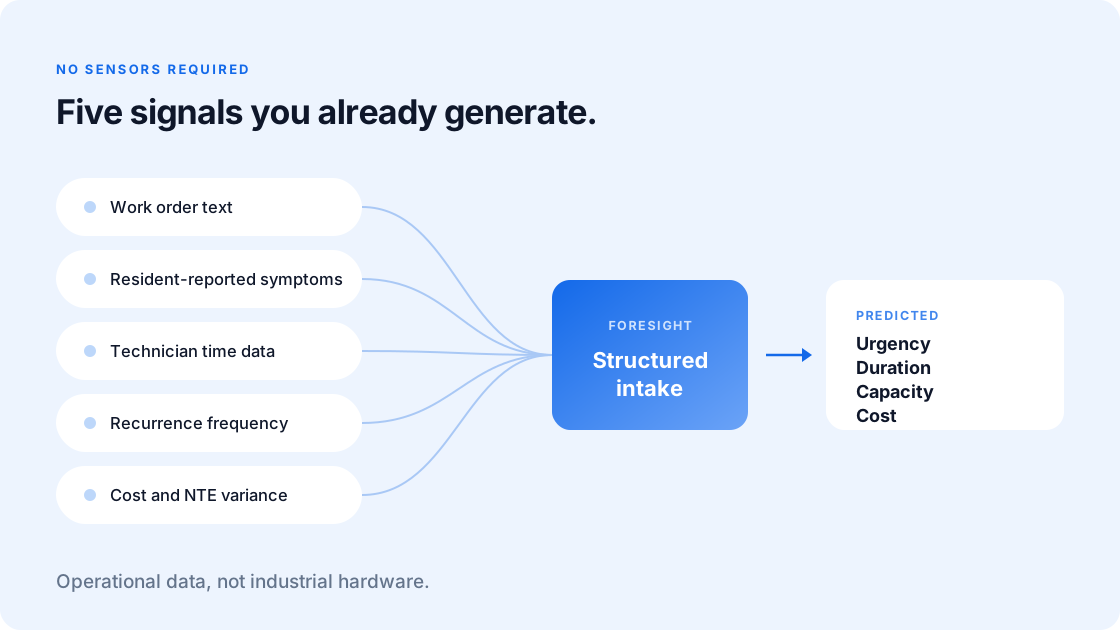
Predictive maintenance analytics is simply the use of data to anticipate maintenance needs before they become emergencies. In property operations, it comes from everyday workflow signals inside your maintenance system rather than from sensors or industrial machinery:
- Work order text (what residents actually say)
- Resident-reported symptoms (severity cues, risk indicators)
- Technician time data (how long different job types really take)
- Recurrence frequency (repeat issues by asset or property)
- Cost variance and not-to-exceed (NTE) patterns (where overruns tend to occur)
The problem is that most property teams can’t use this data because it’s unstructured, inconsistent, and stuck in emails or other vague resident inputs. Without structured intake or automated maintenance triage, the system can’t see patterns, predict workload, or flag risks, so everything defaults to “urgent.” Predictive maintenance analytics changes this by turning operational chaos into structured, predictable insight you can actually act on.
Why Maintenance in Property Management Feels Reactive (The Firefighting Loop)
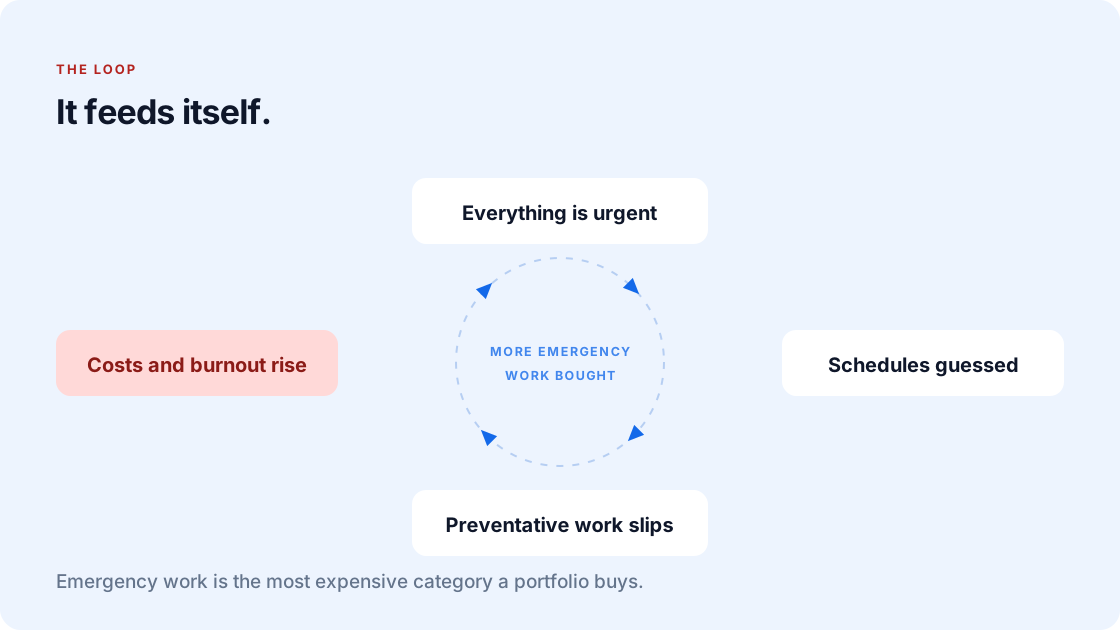
Most property operations feel reactive because the inputs, schedules, and workload signals are chaotic long before a technician ever steps on-site.
- Everything is urgent: Resident descriptions are vague, and without structured triage, routine issues get elevated to emergencies, and true emergencies get buried.
- Schedules are built on guessing: Without accurate job-time prediction, teams rely on rough estimates (“This should take an hour”), making it impossible to forecast real capacity.
- Preventative work slips: When every day is consumed by misclassified “urgent” tasks, scheduled preventative maintenance tasks, inspections, and follow-ups are pushed to the bottom of the list until they come back as true, costly failures.
- Cost and human burnout rise: Techs are constantly under pressure, leading to high friction, inflated labor hours, increased resident churn, and unpredictable maintenance spending, a common outcome of inefficient maintenance technician scheduling. Emergency work is the most expensive category a rental portfolio buys, and reactive operations buy more of it, which is why maintenance costs rise faster than the rest of the operating budget in portfolios stuck in this loop.
This loop continues until organizations implement predictive triage, predictive time analytics, and true workload forecasting, the core of what Lula’s Foresight was built to deliver.
How Predictive Maintenance Analytics Breaks the Cycle
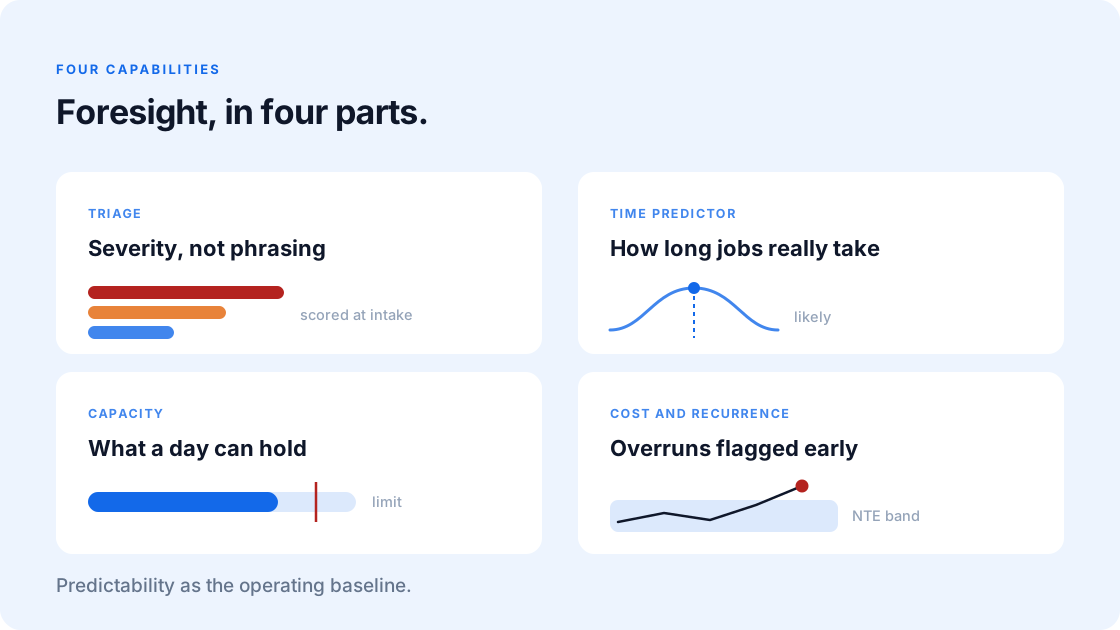
Predictive analytics give property teams what they’ve never had in traditional, reactive maintenance operations: clear visibility, objective prioritization, and forward-looking workload insight. Instead of relying on corrective maintenance after something breaks, Foresight enables a true predictive maintenance strategy built on real-time data, structured intake, and machine learning algorithms that analyze operational patterns as they happen.
Foresight operationalizes this approach through four predictive maintenance tools and technologies:
1: Predictive Triage Analytics Through Machine Learning
Foresight uses natural-language processing to translate vague resident descriptions into structured, categorized, and severity-scored issues. This removes the guesswork that typically inflates urgency and overloads dispatch.
By scoring risk accurately at the intake moment, teams get a queue that reflects actual severity rather than the phrasing of the request, which reduces false emergencies and reactive scrambling.
2: Predictive Time Analytics (Artificial Intelligence Time Predictor)
The AI Time Predictor analyzes historical job performance across trades, skill levels, property types, and regional patterns to forecast how long a task will actually take. This replaces the manual “this should take an hour” estimates that break schedules.
With realistic duration predictions baked into planning, teams get reliable daily workloads and technicians can move through their routes without the cascading delays that come from inaccurate time assumptions.
3: Predictive Capacity Management
Because Foresight predicts job durations at the work-order level, it can model how much work an entire team or vendor network can realistically complete in a day. This makes capacity visible: hidden bottlenecks emerge, overbooking is reduced, and coordinators can plan ahead instead of reshuffling schedules all day.
The result is balanced days, steadier throughput, and fewer operational surprises.
4: Predictive Cost and Recurrence Analytics
Smart NTE learns from your portfolio’s actual labor, material, and resolution patterns, generating predictive cost bands before approval. When something appears outside the expected range, the system flags it immediately so teams can correct scope, prevent overruns, or investigate anomalies. Predictive maintenance pricing covers how those cost expectations are set and why NTE limits drift into becoming targets.
At the same time, Foresight’s recurrence analytics surface repeated issues by asset, unit, or category, revealing patterns that signal an asset trending toward failure, without requiring sensors or hardware. This enables earlier intervention, more accurate budgeting, and fewer avoidable repeat calls.
The Real Win: Predictability in Maintenance Management
Predictive analytics shifts maintenance from reactive scrambling to a planned, manageable maintenance strategy. Instead of relying on guesswork or reacting to system failures as they happen, teams gain a data-driven view of what’s coming, why it matters, and how to prioritize it. This is the real benefit of predictive maintenance: transforming unreliable, reactive maintenance into a stable, proactive workflow built on structured data and intelligent forecasting.
As portfolios generate more consistent data through triage, job-time prediction, and recurrence patterns, Foresight’s predictive maintenance solutions can spot developing issues earlier, minimize downtime, and reduce avoidable maintenance costs. The system becomes capable of making higher-confidence decisions without manual intervention, helping teams anticipate failures, optimize schedules, and reduce the operational drag that comes from constant firefighting.
With Foresight, predictability becomes the operating baseline rather than a future aspiration. When urgency is accurate, schedules are realistic, and workloads are balanced, maintenance stops operating in crisis mode. Technicians stay productive, coordinators regain control of their day, and portfolios benefit from steadier performance, fewer surprises, and a far more reliable maintenance environment.
Book a walkthrough of Foresight to see what your maintenance history can already predict.
Predictive Maintenance Analytics FAQs
How is predictive maintenance different from preventive maintenance in property operations?
Preventive maintenance follows a fixed schedule: seasonal HVAC tune-ups, annual inspections, routine servicing. Predictive maintenance uses historical maintenance records, technician performance patterns, and real-time operational signals to identify the right moment to act. Instead of performing maintenance because the calendar says so, predictive models surface tasks when risk, workload, or recurrence patterns indicate an issue is likely to escalate. In property operations, this minimizes unplanned downtime, reduces unnecessary visits, and ensures teams perform maintenance when it will have the biggest impact.
What data does predictive maintenance analytics rely on in rental portfolios?
Unlike industrial predictive maintenance systems that depend on IoT sensors and vibration analysis, property-operations predictive analytics rely on operational data you already collect, including work order text, resident-reported symptoms, historical job durations, technician logs, cost patterns, repeat issues, and category-level trends. Foresight analyzes this dataset to detect patterns, anticipate failures, optimize maintenance schedules, and prioritize tasks. This makes predictive maintenance accessible even for portfolios without specialized hardware or connected equipment.
What challenges do property management teams face when implementing predictive maintenance?
The biggest challenge is data quality. Most maintenance information is unstructured: emails, vague descriptions, inconsistent vendor notes, or incomplete logs. Without standardized intake or clear maintenance processes, predictive models struggle to identify patterns. Another challenge is organizational inertia, since teams used to reactive workflows have to shift to data-driven prioritization and predictive scheduling, which requires new habits. Foresight addresses these challenges by structuring intake automatically and embedding predictive analytics directly into existing workflows.
How does predictive maintenance improve operational efficiency for property management teams?
Predictive maintenance helps teams prioritize based on urgency, allocate resources intelligently, and prevent issues before they turn into emergency repairs. By analyzing historical data and identifying early warning signs such as repeat issues, time-to-failure patterns, or cost anomalies, predictive maintenance reduces unplanned downtime, extends asset lifespan, and stabilizes daily operations. Property teams gain clearer schedules, fewer emergency disruptions, and more holdable response commitments across HVAC, plumbing, and electrical systems.
Do I need smart-home sensors or IoT hardware to use predictive maintenance analytics?
No. In property operations, predictive maintenance relies on operational data rather than industrial sensors. Foresight uses structured intake, job-time prediction, cost patterns, and recurrence trends to anticipate issues and optimize maintenance schedules. This makes predictive maintenance accessible for any rental portfolio without installing hardware or smart-home devices.
Anything found written in this article was written solely for informational purposes. We advise that you receive professional advice if you plan to move forward with any of the information found. You agree that neither Lula or the author are liable for any damages that arise from the use of the information found within this article
