 on August 13, 2026
Rental Property Maintenance Software
on August 13, 2026
Rental Property Maintenance Software A maintenance service level agreement, or SLA, is the response time a property management team commits to for a resident’s repair request. It sets how quickly a request moves from intake to assignment, and how quickly the repair is completed. In a rental portfolio, those commitments are the difference between a resident who renews and one who stops believing the updates.
Most teams find out they missed a commitment when the monthly report lands. By then the resident has already waited, the vendor has already rescheduled, and the record only confirms what everyone suspected.
Predictive scheduling moves that detection earlier. It uses historical work order data to forecast which resident requests are trending toward a late finish, then rebalances technician assignments before the response window closes.
What A Maintenance SLA Covers In Rental Property Management
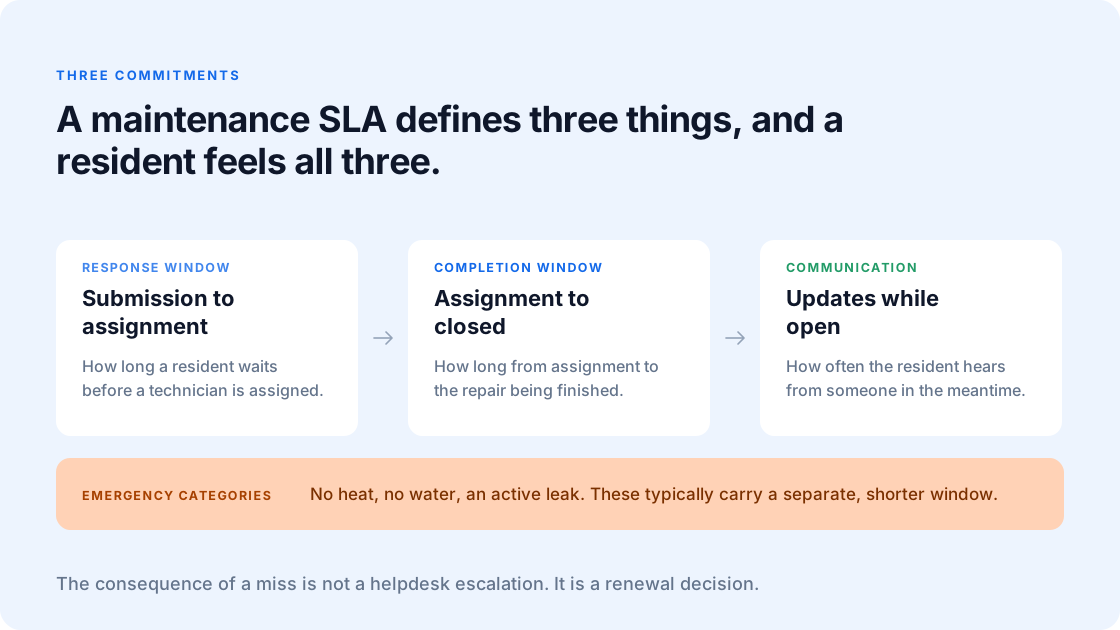
In residential rental operations, a maintenance SLA usually defines three things:
- Response window: How long a resident waits between submitting a request and a technician being assigned. Emergency categories such as no heat, no water, or an active leak typically carry a separate, shorter window.
- Completion window: How long from assignment to the repair being finished and closed.
- Communication cadence: How often the resident receives an update while the request is open.
These commitments may live in a management agreement with an owner, in a resident-facing service standard, or in a vendor contract. The term is borrowed from IT service management, where SLAs govern ticket resolution. In property management, the object is a resident’s repair request rather than a support ticket, and the consequence of a miss is a renewal decision rather than a helpdesk escalation.
Why Response Time Tracking Fails In Rental Portfolios
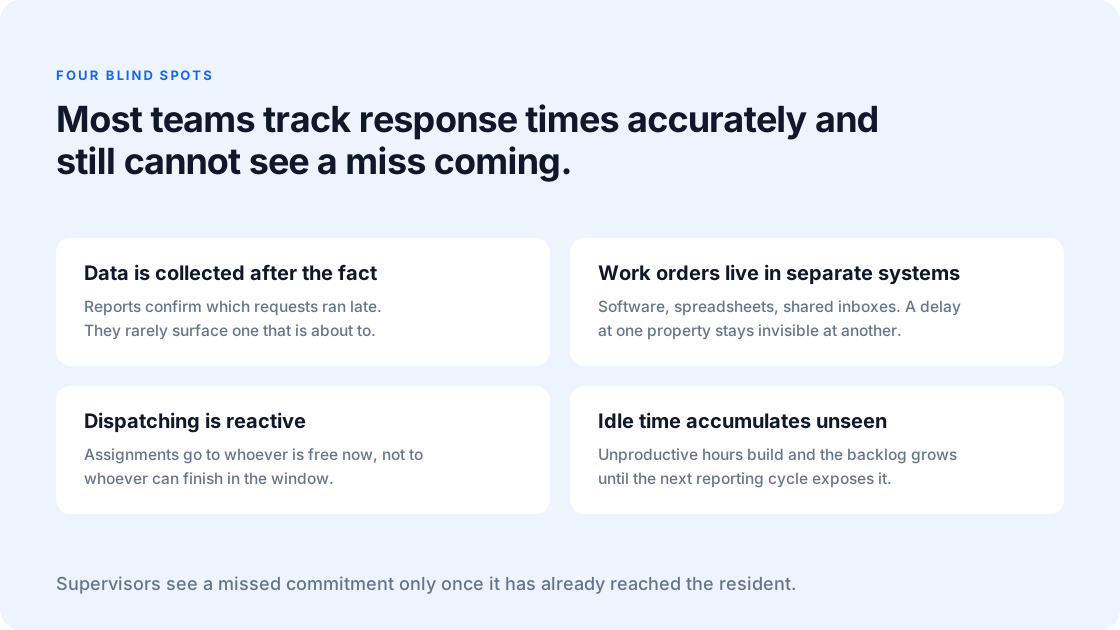
Most property management teams track response times to demonstrate reliability. The way that tracking is usually built makes early warning signs invisible.
- Response data is collected after the fact: Reports confirm which resident requests ran late. They rarely surface a request that is about to run late. Supervisors see a missed commitment only once it has already reached the resident.
- Work orders live in separate systems: Requests arrive through property management software, spreadsheets, and shared inboxes, and status updates depend on manual entry. No single view of the portfolio exists, so a delay in one property stays invisible to the supervisor covering another.
- Dispatching is reactive: Supervisors assign resident requests based on who is free right now rather than on how long similar repairs have actually taken. Without a realistic duration forecast, reassignment happens after the response window has already closed.
- Idle time accumulates unseen: Without a live view of technician progress across properties, unproductive hours build up and the maintenance backlog grows until the next reporting cycle exposes it.
What A Missed Response Time Costs
A late repair is rarely just a late repair. Each missed commitment traces back to a visibility gap, and the cost shows up across the portfolio.
- Resident trust erodes: Delays without communication create uncertainty. Residents stop treating updates as reliable, satisfaction scores fall, and renewal conversations get harder.
- Vendor relationships strain: Vendors absorb the consequences of scheduling problems they did not create. When work orders arrive late or overlap, service quality drops and dependable vendors become slower to accept new jobs.
- Labor hours go unrecovered: Time spent locating parts, waiting on approvals, or driving between properties is time not spent completing repairs. Those hours are paid for either way.
- Accountability blurs: When progress is tracked manually, performance reviews depend on recollection rather than record. Without objective measurement, missed response times become normal and responsibility spreads thin enough that no one owns it.
How Predictive Scheduling Protects Response Times
Predictive scheduling applies forecasting to technician assignment. Instead of a static daily plan, the schedule updates as conditions change across the portfolio.
Live Response Monitoring
Response time targets sit inside the daily workflow rather than in a monthly report. Each resident request carries its own countdown, so a supervisor can see which repairs are drifting toward their window before the window closes. When a repair starts running long, an alert prompts reassignment while there is still time to act.
Repair Duration Forecasting
Repair types vary in how long they actually take, and that variation is property-specific. A water heater replacement in a 1970s single-family rental behaves differently from the same job in a 2015 mid-rise.
Predictive models use historical work order records to forecast realistic durations for a given repair type at a given property. That forecast is what prevents the two most common causes of a missed response window: schedules packed beyond genuine capacity, and time estimates that were never achievable.
Dynamic Workload Balancing
Conditions shift during the day. A technician runs long, an emergency request arrives, a property becomes inaccessible. The system redistributes remaining assignments as those changes occur, which keeps technician loads even and holds response commitments without a supervisor manually reshuffling the board.
Route Sequencing
Sequencing repairs geographically reduces drive time between properties and returns those hours to repair work. Supervisors can see mileage, drive time, and arrival accuracy in one view, which connects routing decisions directly to response performance.
Foresight in Action
Lula’s Foresight applies these principles to daily response management across a rental portfolio.
Foresight reads live work order data, technician progress, and response time targets to identify which resident requests are trending late. When completion times begin to drift, it flags the request and adjusts assignments to rebalance the day. Routes update as conditions change, and each technician works from a schedule built on duration data drawn from comparable repairs.
For property management teams, that means response commitments are managed during the day rather than reviewed at the end of the month.
The Metrics That Show Response Performance
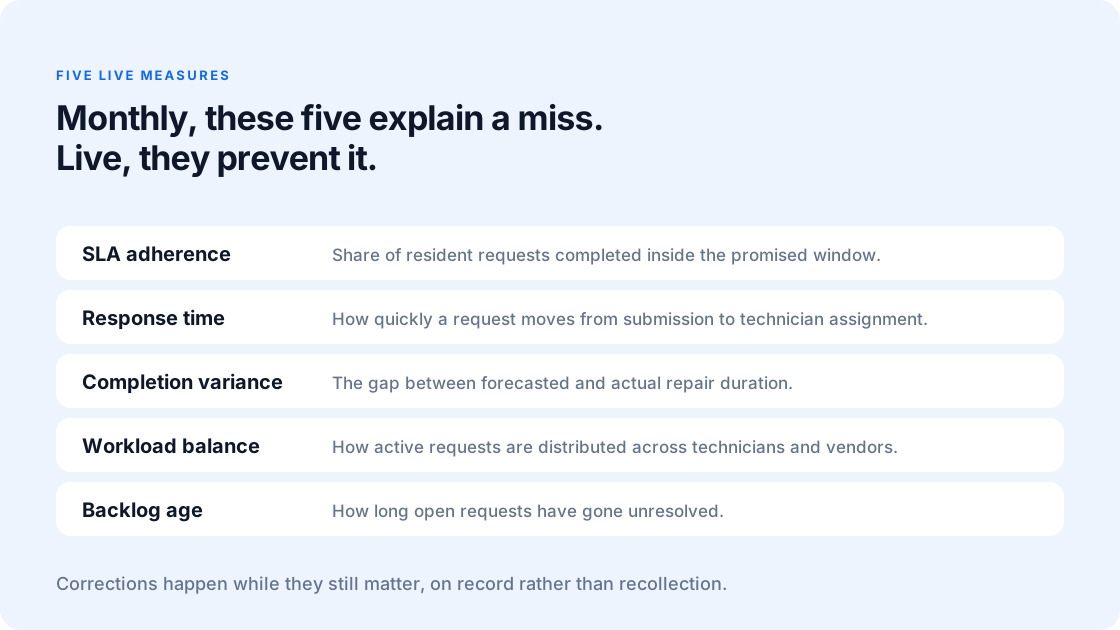
Predictive scheduling is only useful when the data it produces reaches the people making assignment decisions. Five measures consistently indicate whether a portfolio is holding its commitments:
- SLA adherence: The share of resident requests completed inside the promised window.
- Response time: How quickly a new request moves from resident submission to technician assignment.
- Completion time variance: The gap between forecasted and actual repair duration.
- Workload balance: How active requests are distributed across technicians and vendors.
- Backlog age: How long open requests have gone unresolved.
When these update live rather than monthly, performance conversations rest on record rather than recollection, and corrections happen while they still matter.
What Improves When Response Times Hold
Moving from retrospective tracking to live forecasting changes several things across a rental portfolio.
- Fewer silent delays: Requests trending late become visible while there is still room to reassign, so fewer commitments are missed without anyone noticing.
- Recovered labor hours: Balanced assignments and realistic duration forecasts return hours previously lost to rescheduling and drive time, which raises completed repairs per technician.
- Lower operating costs: Reduced overtime, shorter routes, and fewer repeat visits accumulate into margin.
- Stronger retention: Reliable repair timelines and consistent communication support satisfaction scores, and satisfaction shows up in renewal rates and turnover cost.
- More stable teams: Achievable schedules and clear priorities reduce technician fatigue, which helps retain experienced staff in a labor market where that is difficult.
Common Obstacles to Adoption
Predictive scheduling has real prerequisites, and teams that skip them get forecasts they cannot trust.
- Data quality comes first: The models need clean, consistent historical work order records to forecast durations accurately. A portfolio with incomplete or inconsistent repair records will produce forecasts that look precise and are not. This is the most common reason implementations underdeliver.
- Integration determines whether it holds: The platform has to exchange data both ways with the property management system already in place. Without that, the schedule becomes another system to update manually, and it will fall out of date.
- Adoption requires training on interpretation: Teams accustomed to reacting need to learn what a predictive alert is telling them and when to act on it. Training that covers software features without covering judgment produces alerts that get dismissed.
- Predictive scheduling does not fix understaffing: If a portfolio lacks the technician capacity to meet its committed response windows, better forecasting will surface that gap accurately and repeatedly. It will not close it.
Where This Fits
For property management teams operating at scale, response time performance depends on scheduling, visibility, and cost control working from the same data. Predictive scheduling handles the assignment layer. It works best as part of a broader AI-powered maintenance operation connecting intake, dispatch, vendor coordination, and reporting into one workflow.
Book a walkthrough of Foresight today.
Maintenance Response Times FAQs
How does predictive scheduling improve SLA compliance in rental property maintenance?
Predictive scheduling uses historical work order data and live technician progress to identify which resident requests are trending toward a late finish. By analyzing past repair durations, technician availability, and travel patterns between properties, the system flags at-risk requests while there is still time to reassign or reroute. Supervisors act before the response window closes rather than reviewing the miss afterward, which reduces emergency dispatching and supports resident confidence in repair timelines.
What are the main benefits of predictive insights for property management teams?
Predictive analytics give property management teams ongoing visibility into technician capacity, recurring repair issues, and property-level reliability. Models tracking repair frequency, completion variance, and technician utilization surface early indicators of a growing maintenance backlog before it becomes deferred maintenance. That visibility helps stabilize labor costs and standardize performance across geographically distributed properties.
What challenges arise when implementing predictive scheduling in property management?
The three recurring challenges are data quality, integration, and adoption. Predictive tools depend on accurate historical work order records, and inconsistent data weakens forecast reliability. Integration must support two-way data flow with the existing property management system to avoid creating another manual update step. Adoption requires training that covers how to interpret and act on predictive alerts, not only how to operate the software.
What is a reasonable maintenance response time for a rental property?
Response windows vary by category and by what is committed in the management agreement or resident service standard. Emergency categories such as loss of heat, loss of water, or an active leak typically carry the shortest windows, with routine repairs allowed longer. State and municipal habitability law sets separate minimum requirements that operate independently of any internal commitment.
Anything found written in this article was written solely for informational purposes. We advise that you receive professional advice if you plan to move forward with any of the information found. You agree that neither Lula or the author are liable for any damages that arise from the use of the information found within this article
